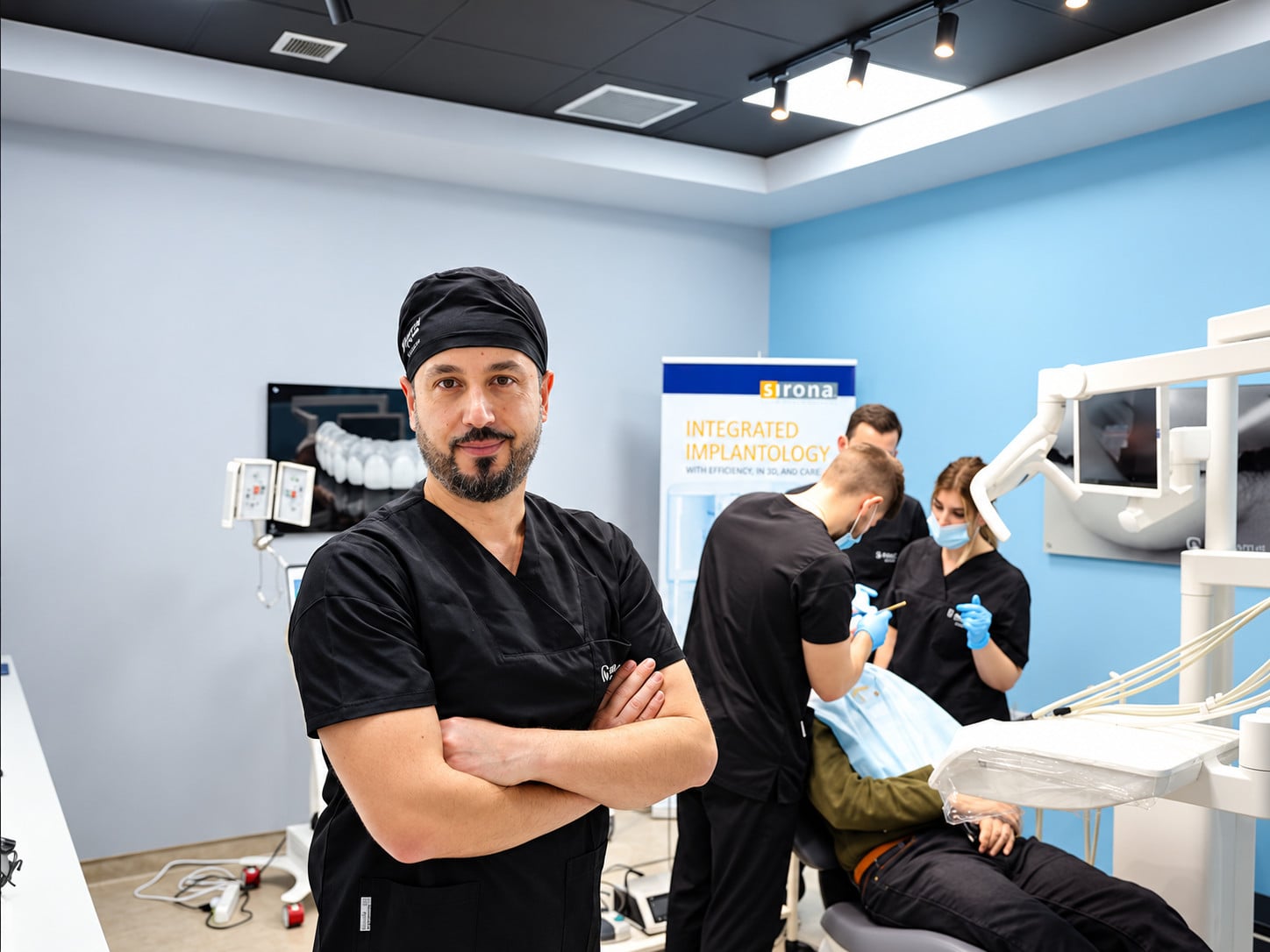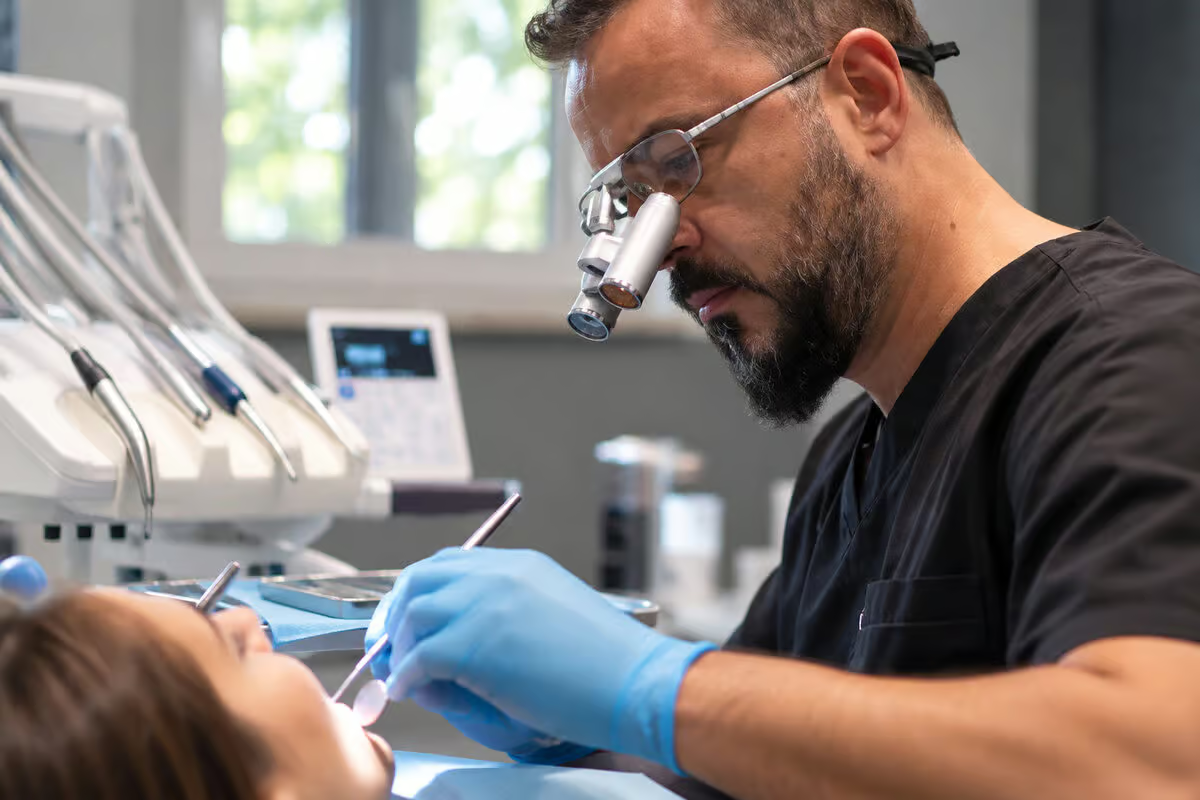

What should you know before getting dental implants in Albania? Below, Dr. Roland Zhuka answers seven common questions about implant pain, bone loss and healing. He also explains All-on-4, All-on-6 and fixed teeth at Implantus Dental Clinic in Tirana.
1. Who Can Have Dental Implants In Albania?
Dental implants may be suitable if you have one missing tooth, several missing teeth or an entire arch to replace. My first step is to understand what you need to restore and whether your mouth can support the proposed treatment.
For a missing front tooth, the plan focuses on the gap, neighbouring teeth and gum appearance. For someone with a loose denture, the discussion may focus on replacing a complete arch or improving denture stability.
What I Check Before Recommending Implants
- Remaining teeth: whether damaged teeth can be restored and maintained.
- Gum health: whether inflammation or periodontal disease needs treatment.
- Jawbone: whether the planned implant sites offer enough support.
- Medical history: conditions, medication and previous healing problems.
- Your bite: how the replacement teeth will meet the opposite teeth.
An implant replaces a missing tooth root, while a crown or bridge provides the visible teeth. Planning both parts together helps establish how the finished restoration will fit your mouth.
Can Older Adults Have Dental Implants?
Age alone does not determine suitability for dental implants. An older adult with suitable health and oral conditions may be a candidate, while another person may need preparatory treatment.
Smoking, medication and conditions such as diabetes need individual assessment because they can affect healing. Tell the clinic about them when discussing dental implant treatment in Tirana.
2. Can I Have Dental Implants With Little Jawbone Left?
Little bone does not automatically rule out dental implants. I need to assess the amount and location of bone loss before discussing conventional implants, bone regeneration or more specialised treatment.
At Implantus, implant planning includes assessment of the jaw using appropriate imaging. A CBCT scan is a three-dimensional dental scan that helps show bone shape and nearby structures.
A panoramic X-ray can provide an initial overview, but it does not show the exact width of the bone. This is why a case that looks simple in a photograph may require more detailed planning.
Bone Regeneration, Sinus Lift or Zygomatic Implants?
| Treatment | When It May Be Considered |
| Conventional dental implants | Suitable supporting bone is available at the planned sites |
| Bone grafting or bone regeneration | Additional bone volume is needed for implant placement |
| Sinus lift | Bone height beneath the sinus limits selected upper back implant sites |
| Zygomatic implants | Severe upper-jaw bone loss makes conventional implant treatment unsuitable |
Bone grafting for dental implants may be carried out with implant placement when the defect is small. More extensive reconstruction may require a separate procedure and healing stage.
A sinus lift concerns selected areas at the back of the upper jaw. It is considered according to the sinus position and the available bone height.
What Makes Severe Bone Loss a Different Case?
Implantus also offers zygomatic implants for selected cases of severe upper-jaw bone loss. These longer implants use support from the cheekbone and require advanced assessment and planning.
If you have already been told that you have insufficient bone for dental implants, share the scan behind that assessment. Reviewing it can help clarify which areas are affected and which options need investigation.
3. Are Dental Implants Painful?
Dental implant placement is usually performed under local anaesthesia to numb the treatment area. Discomfort after surgery is a separate part of recovery, and I explain what to expect for the procedure being planned.
If you are searching for painless dental implants in Albania, the useful question is how your comfort will be managed. Local anaesthesia, anxiety support and recovery instructions should be discussed before treatment begins.
A single implant and surgery involving several extractions can have different recovery needs. The number of implants and any bone grafting also affect the advice you receive.
Comfort During Dental Implant Surgery
Local anaesthesia allows the treatment area to be numbed while you remain awake. Tell the team if you feel pain or need a pause during the appointment.
Implantus also describes sedation and general anaesthesia among its treatment options. Whether either is appropriate requires a discussion of your health, the procedure and the necessary anaesthetic assessment.
If you have had a difficult dental experience, explain what happened. Knowing whether your concern involves injections, the length of the appointment or being awake helps make that discussion more specific.
What Happens During the First Days of Recovery?
Soreness, swelling and bruising can occur after dental implant surgery. Their extent varies, so recovery instructions should match your operation.
Your Recovery Instructions
- Pain relief: the medication and directions appropriate for you.
- Eating: whether softer foods are needed and which foods to avoid initially.
- Cleaning: how to care for the mouth and treated area.
- Activity: when to resume work, exercise and other routines.
- Reviews: when the wound and any stitches need checking.
Follow the instructions provided rather than borrowing another patient’s recovery schedule. Someone having one implant may receive different advice from someone undergoing full-arch implant treatment.
4. How Many Dental Implants Do I Need?
The number depends on how many teeth need replacing and how they will be supported. A single dental implant may support one crown, while a group of implants may support a bridge or a complete arch.
The number of implants is therefore different from the number of visible teeth. I plan their positions around the available bone, your bite and the restoration they will support.
Which Implant Treatment Replaces Which Teeth?
| Missing Teeth | Possible Replacement |
| One missing tooth | A single dental implant with a crown |
| Several missing teeth | An implant-supported dental bridge |
| All teeth in one jaw | A full-arch implant restoration |
| Teeth in both jaws | A full-mouth plan covering the upper and lower arches |
A single implant can replace a tooth without using neighbouring teeth as bridge supports. An implant-supported dental bridge may replace several teeth together when the proposed support is suitable.
All-on-4 or All-on-6: How Do I Choose?
All-on-4 dental implants use four implants to support replacement teeth for one arch. All-on-6 dental implants use six implants for that arch.
Both options are offered at Implantus Dental Clinic in Tirana. The choice depends on where implants can be placed and how the planned teeth will be supported.
What About Appearance?
For a front tooth dental implant, I consider the neighbouring tooth shapes, shade and gum line. For a complete arch, the discussion also includes tooth size, the smile line and the appearance of any replacement gum.
The clinic’s dental implant pages include published before-and-after images of All-on-6 restorations. Use these implant treatment examples to discuss the appearance you prefer, while recognising that your starting condition may differ.
5. Can I Get Fixed Teeth In One Day?
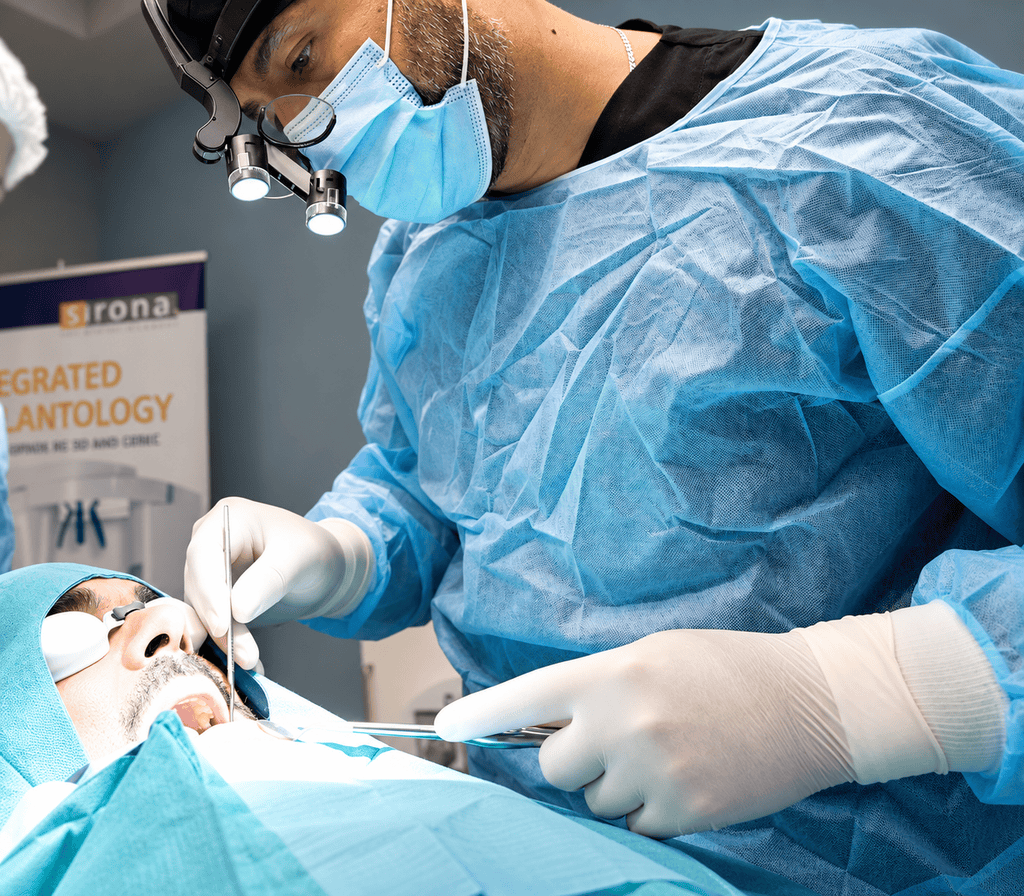
Selected patients can receive fixed temporary teeth soon after implant placement. This approach is called immediate loading and depends on clinical conditions and sufficient initial implant stability.
At Implantus, immediate loading is among the options considered for suitable implant cases. The decision must account for the bone, implant arrangement, bite and any additional procedures.
The phrase “fixed teeth in one day” refers to an early restoration when the case allows it. The complete treatment can still include months of healing and later work on the final teeth.
How Does Immediate Loading Work?
With immediate loading implantology, replacement teeth are attached early rather than after a conventional healing period. Initial implant stability must be confirmed during placement.
What Determines Suitability for Immediate Loading?
- Whether the implants have enough initial support.
- How the temporary restoration will distribute chewing forces.
- Whether bone grafting or other procedures affect the timing.
- What eating restrictions apply during healing.
- Which temporary option will be used if early loading is unsuitable.
Are the Temporary Teeth the Final Teeth?
A temporary crown or bridge is used during healing and the continuing treatment stages. The final dental crown or bridge is made and checked for fit, bite and appearance according to the restorative plan.
What If a Tooth Is Removed During the Same Appointment?
Immediate implant placement means placing an implant when a tooth is extracted. Immediate loading means attaching replacement teeth early, so the two decisions need separate assessment.
For a missing front tooth, we should discuss how the gap will be covered during each stage. A fixed or removable temporary tooth may be considered depending on the case.
Temporary fixed teeth also need protection while healing continues. Follow the prescribed eating instructions even if the restoration feels stable.
6. How Many Trips To Albania Will I Need For Dental Implants?
Many implant treatment plans for patients travelling from Italy involve two main trips. The first includes the surgical stage, while a later trip is used for the definitive replacement teeth.
Implantus publishes example schedules for dental tourism in Albania. They provide a starting point for travel planning, with the individual schedule confirmed after assessment.
Example Implant Treatment Schedules at Implantus
| Treatment Pathway | First Stay | Later Stay | The whole Interval |
| Single implant with delayed loading | 2–3 days | 3–4 days | 3–6 months |
| Full-arch immediate loading, including suitable All-on-4 or All-on-6 cases | 5–7 days | 4–5 days | 4–6 months |
These are the clinic’s published planning examples. Bone grafting, a sinus lift, additional treatment or changes in healing may alter the number or timing of visits.
Why Is There a Healing Period Between Trips?
Bone needs time to heal around the implants before the planned restoration can be completed. With conventional loading, this commonly takes around two to six months, although the complete treatment may take longer.
The later restorative appointments involve making and checking the crown or bridge. Fitting the final teeth also includes assessment of how the teeth meet and whether adjustments are needed.
Can I Start the Consultation From Italy?
The clinic offers an online dental consultation for patients from Italy. You can share existing dental imaging, photographs and treatment records before travelling to Tirana.
Send an original digital panoramic X-ray if available. If you already have a CBCT scan, the complete DICOM files provide more information than a screenshot.
The online assessment helps establish a possible treatment direction. Examination and any necessary imaging in Tirana are still needed to confirm the diagnosis and final plan.
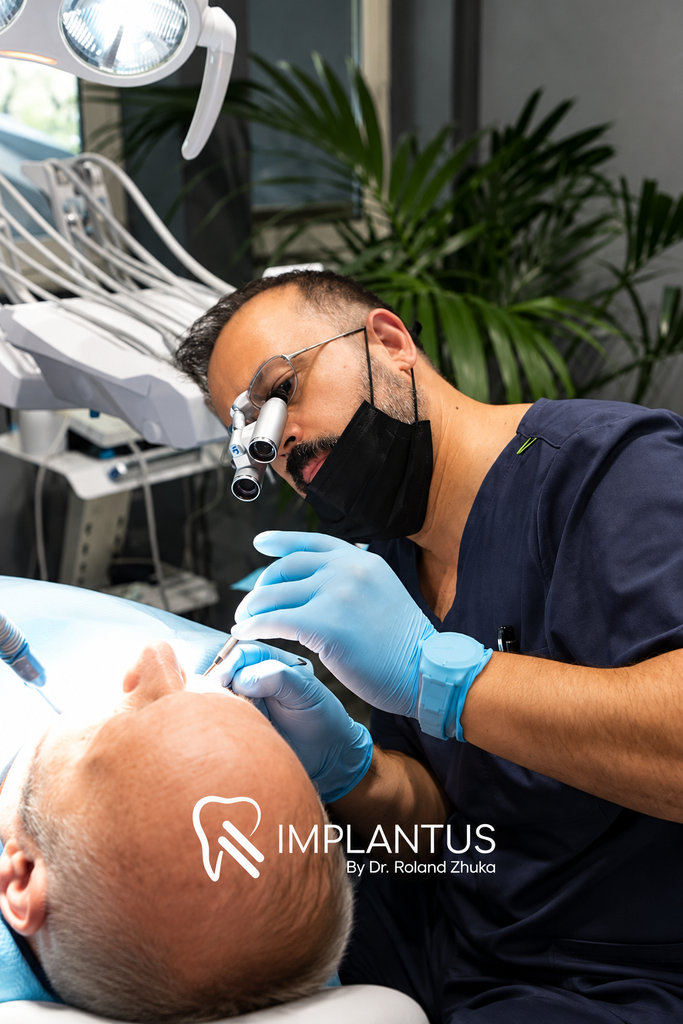
7. How Long Do Dental Implants Last, And How Do I Maintain Them?
Dental implants can provide long-term tooth replacement, but their lifespan varies between patients. Ongoing care needs to cover the implants, the surrounding tissues and the visible replacement teeth.
The implant in the bone and the crown or bridge above it are separate components. A restoration may need repair or replacement even when the implant remains functional.
What Can Affect Implant Teeth Over Time?
A loose connecting part, chipped tooth or change in the bite needs assessment. These problems can affect comfort and function, so they should be discussed with the dental team.
If you grind or clench your teeth, mention it during your assessment. Your bite and restoration may need additional protection, such as a night guard if the dentist recommends one.
What Does Daily Implant Care Involve?
The cleaning routine depends on your restoration. A single implant crown, a short bridge and a complete arch have different areas that need to be reached.
Your Daily Implant Care
- Brushing: cleaning the replacement teeth and gum line as demonstrated.
- Interdental cleaning: reaching suitable spaces around individual teeth and implants.
- Cleaning beneath bridges: using the tools recommended for that restoration.
- Monitoring the gums: reporting persistent bleeding, swelling or discomfort.
- Protecting the restoration: following advice about biting habits or other relevant risks.
The team should demonstrate how to clean the areas beneath fixed teeth. Practising the technique helps you understand whether you can manage the routine at home.
Can Implants Develop Gum Problems?
The tissues around dental implants can become inflamed. Peri-implantitis involves inflammation with bone loss around an implant and requires professional assessment.
A history of periodontal disease, smoking and poor oral hygiene can increase the risk of problems. Removing teeth does not eliminate the need to manage these factors.
What Happens After I Return to Italy?
Your treatment plan should explain how implant care and maintenance will continue after you return to Italy. Keep your records so the dentist providing reviews can identify your implants and restoration.
Discuss Your Dental Implants In Albania With Dr. Roland Zhuka
Find out which tooth replacement options could suit your mouth and your goals. Contact Dr. Roland Zhuka at Implantus Dental Clinic in Tirana to discuss a single dental implant, All-on-4, All-on-6 or treatment for severe bone loss. Share recent imaging if available and tell the team whether your priority is replacing a front tooth, improving chewing or getting fixed teeth.
- 📲 Phone / WhatsApp: +355 69 70 44 409
- ✉️ Email: info@dr-rolandzhuka.com
- 📍 Address: Implantus Dental Clinic, Rruga Faik Konica, near Air Albania Stadium, Tirana, Albania.