
Why is one tooth dark when the rest of your smile looks normal? A single gray, brown or black tooth may reflect surface staining, past trauma, changes after root canal treatment, decay or an old restoration. At Implantus Dental Clinic in Tirana, we identify the cause and check the tooth’s health before comparing whitening, bonding, veneers and crowns, with the aim of preserving healthy tooth structure whenever possible.
Why Is One Tooth Dark When the Others Are Not?
Yellowing across several teeth often reflects staining or aging. One gray, brown, or black tooth may have a different cause.
Stains on the tooth surface
Coffee, tea, tobacco, and certain foods can leave pigments on enamel, although these usually affect more than one tooth. Staining around an old filling or rough enamel may darken one tooth.
Professional cleaning may remove surface deposits before any bleaching is considered. However, polishing cannot change discoloration that has developed inside the tooth.
Previous injury or changes inside the tooth
A fall, sports injury, or impact can damage the tissues inside a tooth even when no visible fracture appears. Discoloration after trauma may result from internal bleeding, changes in dentin, or loss of vitality in the dental pulp.
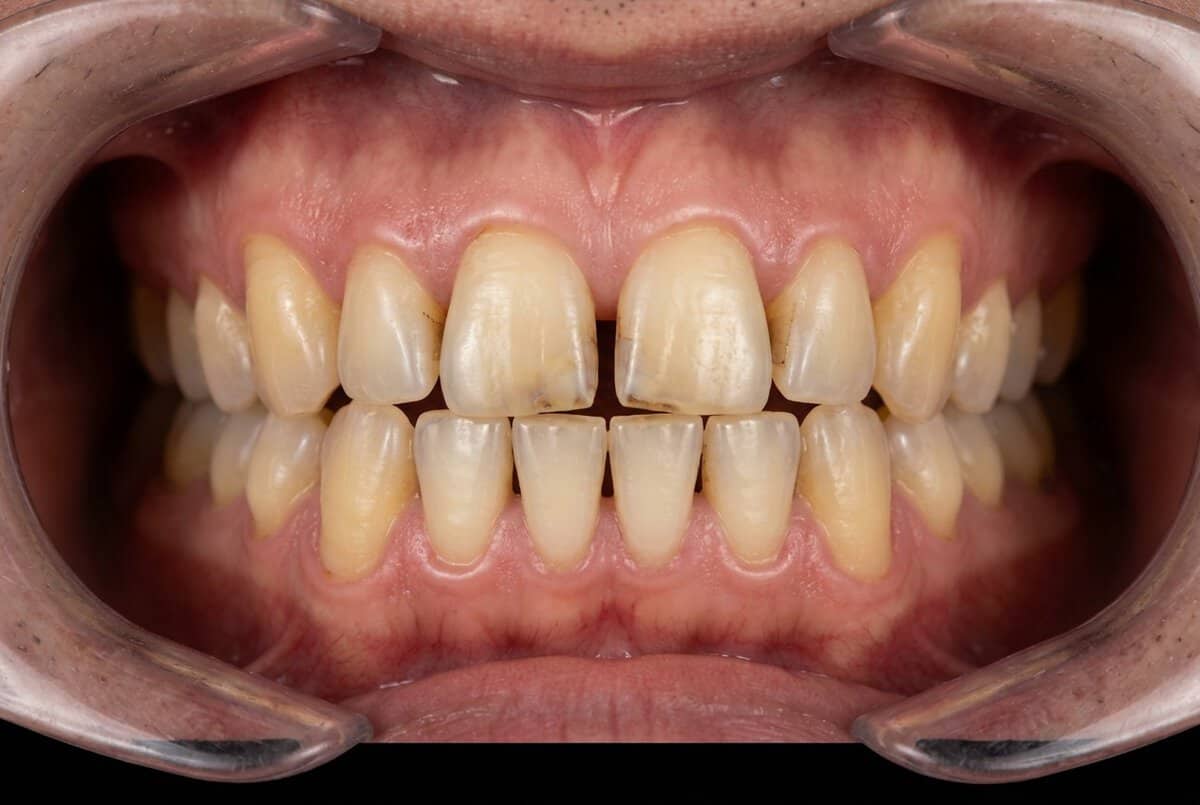
The tooth might not hurt, so pain alone cannot tell us whether it remains healthy. A recent or progressively darkening tooth should be examined, particularly after an injury.
Root canal treatment, decay, or older restorations
A tooth previously treated with a root canal may retain internal staining or become darker for several reasons. Deep decay and some older restorative materials can also change its appearance, sometimes alongside structural damage.
These conditions do not all require the same treatment. Understanding whether the tooth is healthy, infected, heavily restored, or simply stained is the first step.
Before Cosmetic Treatment, Check Why the Tooth Is Dark
Covering a dark tooth without investigating the cause may hide a problem that still needs attention. Our team begins with an examination of the tooth, surrounding gums, previous fillings, and any history of injury or root canal treatment.
Depending on the findings, the dentist may assess the tooth’s response to temperature, examine the bite, and request a dental X-ray. These checks help determine whether the pulp is healthy, whether infection is suspected, and how much sound tooth structure remains.
Seek prompt dental care if discoloration is accompanied by swelling, persistent pain, a gum bump, or tenderness when biting. If the tooth has recently been injured, arrange an evaluation even without discomfort.
Our guide to signs you might need a root canal explains why darkening sometimes reflects a problem inside the tooth. Cosmetic treatment should follow the necessary diagnosis, not replace it.
When Is Whitening The Better Option For One Dark Tooth?
Whitening is generally worth considering when the tooth is structurally healthy and its discoloration may respond to bleaching. It usually preserves more natural tooth structure than preparing a tooth for a crown.
However, whitening does not work equally well on every type of stain. The dentist must distinguish surface discoloration from deeper color changes and explain the likelihood of matching neighboring teeth.
External whitening for a living tooth
External whitening uses a bleaching agent on the outside of natural teeth (see the NHS guide to teeth whitening). It may help certain yellow or brown stains, although a deeply gray tooth or discoloration caused by trauma can respond poorly.
Treating one tooth also presents a shade-matching challenge because the surrounding teeth may already be lighter. Your dentist may recommend targeted treatment and reassessment.
At Implantus, we provide professional teeth whitening and assess whether it is reasonable for the cause of discoloration. Whitening can cause temporary sensitivity, and results vary with the tooth’s condition.
Internal whitening after root canal treatment
If a dark tooth has received appropriate root canal treatment, internal bleaching may sometimes improve its color without requiring a full crown. A dentist places whitening material inside the tooth using protective measures.
Internal bleaching is not suitable for every root-treated tooth, and it carries specific risks that should be discussed. The root canal, tooth structure, and existing restoration must be evaluated before proceeding.
Importantly, a healthy living tooth should not receive root canal treatment merely to make internal whitening possible. If treatment is needed for an infected or damaged pulp, that medical issue comes before cosmetic shade correction.
When Might A Dental Crown Be The Better Choice?
A dental crown covers the visible portion of a prepared tooth and can change its color, form, and strength. Unlike whitening, a crown can help restore a tooth that has lost substantial structure as well as improve its appearance.
When there is significant damage
A crown may be appropriate when the dark tooth also has extensive decay, a large failing filling, fracture damage, or too little sound structure for a smaller repair. In these cases, appearance is only part of the decision; the remaining tooth needs adequate protection and function.
However, an intact front tooth is not automatically a crown candidate because it has changed color. Preparing it for full coverage removes natural structure, and the decision should have a clear restorative reason.
When whitening cannot correct the shade
Some deep discolorations resist bleaching or leave a result that does not blend with nearby teeth. A carefully selected crown can mask the darker underlying tooth while recreating a suitable shape and visible shade.
The dentist considers underlying darkness, restoration thickness, and light transmission. A crown chosen only by its shade on a chart may look different once fitted over a dark tooth.
Our zirconia and E-Max crown options allow different approaches to strength, translucency, and aesthetics. The material decision should follow the tooth’s condition and the appearance we need to achieve, rather than assuming one ceramic suits everyone.
When the tooth has already been root treated
Some root-treated teeth need crowns because substantial tooth structure was lost before or during treatment. Others, especially certain front teeth with enough remaining structure, may be restored more conservatively after clinical evaluation.
The history of root canal treatment alone does not settle the choice. We assess the remaining walls, existing filling, bite pressure, and risk of fracture before advising full coverage.
Whitening or a Crown for One Dark Tooth: The Differences
The central difference is whether treatment only needs to improve color or must also rebuild a damaged tooth. The following comparison shows why the least invasive suitable option is often considered first.
| Factor | Whitening | Dental crown |
|---|---|---|
| Main purpose | Lighten natural tooth color | Cover and restore a prepared tooth |
| Tooth preparation | Usually little or none | Requires removal of tooth structure |
| Best suited to | Healthy teeth with responsive discoloration | Teeth needing substantial repair or reliable color masking |
| Limitations | Some dark stains resist bleaching | Irreversible preparation and future maintenance |
| Shade matching | Response can be difficult to control | Material and shade can be planned, but underlying color matters |
A crown is not necessarily the stronger choice for a healthy, darkened tooth, and whitening is not necessarily safer if the pulp is diseased. Diagnosis decides which advantage matters in your particular case.
Could A Veneer Or Dental Bonding Work Instead?
Sometimes the decision is not limited to whitening or a crown. If the tooth is healthy but the discoloration does not respond sufficiently to bleaching, a veneer or composite restoration may offer another possibility.
A veneer covers mainly the front surface, potentially changing color and shape with less coverage than a crown. Yet porcelain veneers often require irreversible enamel removal, and strong underlying discoloration may complicate the desired appearance.
Our clinic offers dental veneers for selected aesthetic concerns. Suitability depends on enamel, bite, existing restorations, and the amount of masking required.
For smaller defects or local color differences, dental bonding may also be considered. Composite material can sometimes be repaired or adjusted more easily, although it can stain and may not conceal severe darkness as effectively as another restoration.
How We Plan A Natural Color Match At Implantus
A single front tooth is one of the most demanding teeth to match aesthetically because it sits directly beside natural neighbors. Color is not simply white or yellow; translucency, surface texture, brightness, and the way light reaches the tooth all influence the result.
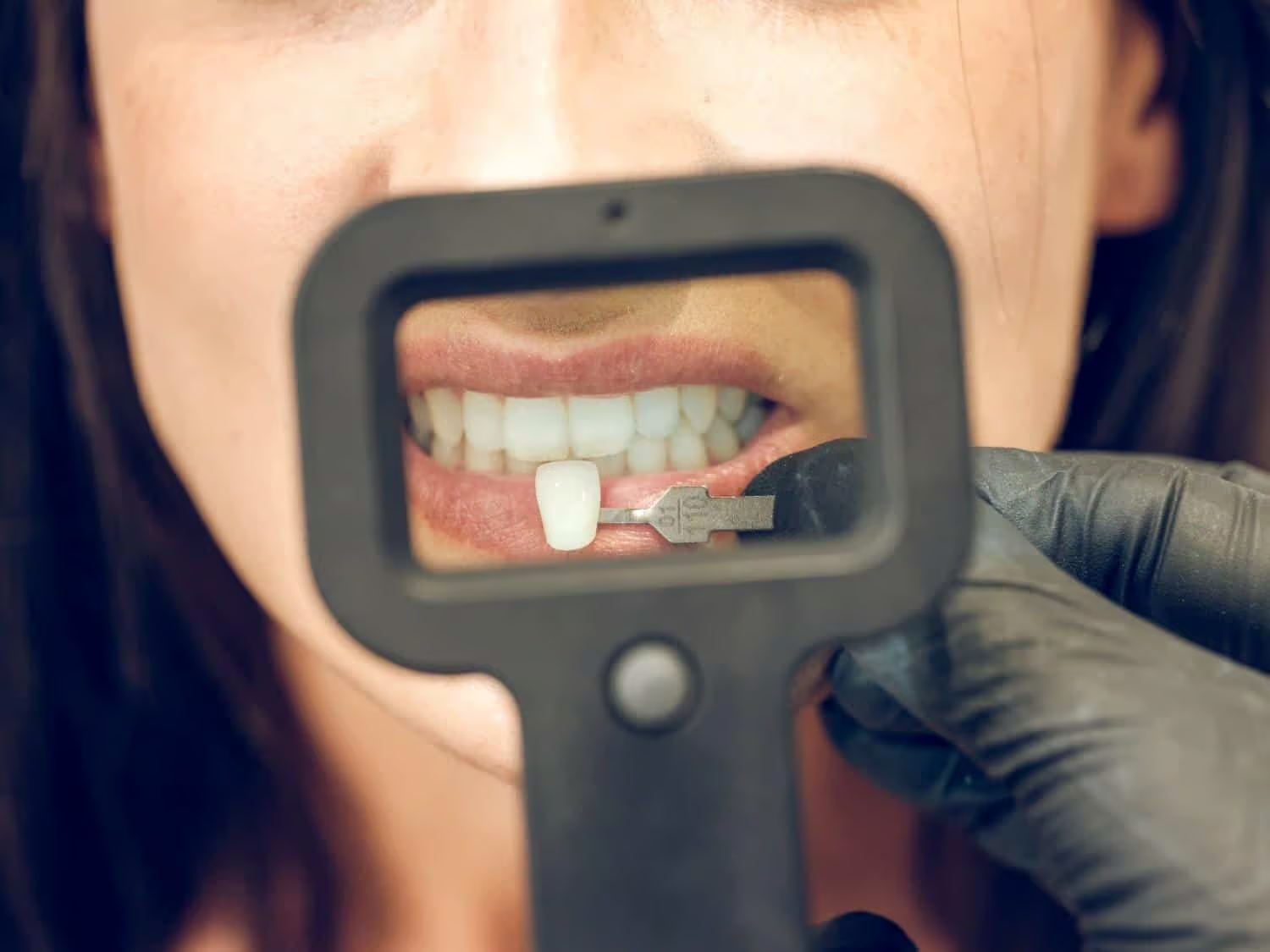
At Implantus, Dr. Roland Zhuka’s team evaluates the tooth’s condition and the patient’s smile before selecting an aesthetic treatment. The clinic provides restorative options and digital planning resources that can help patients discuss proposed changes.
Looking beyond a shade guide
We assess the neighboring teeth in different areas because their color may vary from the gumline to the biting edge. A bright restoration can look artificial if its shape or light reflection differs.
The clinic’s Digital Smile Design service helps organize aesthetic expectations and treatment planning where appropriate. It is a planning aid rather than a guarantee of an exact visual result.
Choosing the least invasive suitable approach
Our objective is to address the patient’s concern while retaining healthy dental tissue whenever practical. We discuss whether cleaning, whitening, a smaller restoration, or a crown can reasonably achieve the desired change.
If the dark tooth requires medical treatment first, that becomes the priority. Only after understanding its health and structural condition can we make a responsible aesthetic recommendation.
What International Patients Should Know Before Visiting Tirana
If you are traveling for treatment, photographs can show how noticeable the tooth’s discoloration is, but they cannot establish its cause. Recent dental X-rays and information about previous injury, root canal treatment, or fillings may help the clinic prepare for your assessment.
Whitening, bonding, veneers, and crowns involve different appointments and expectations. A tooth requiring root canal therapy or treatment for infection may need a different schedule than a purely cosmetic case.
Avoid planning travel around a promised same-day cosmetic correction before your tooth has been examined. The correct sequence depends on whether there is an underlying dental problem and which restoration, if any, is needed.
How To Protect The Result Afterward
Natural teeth may darken again over time, especially with frequent exposure to staining foods, drinks, and tobacco. Good daily cleaning and professional checkups help maintain oral health and identify new changes early.
Crowns and veneers do not respond to whitening agents like natural enamel. If surrounding teeth are bleached later, the restoration may no longer match and could require reassessment.
Any repaired tooth also needs attention to biting habits, hygiene, and the surrounding gum tissue. Tell your dentist if discoloration returns, a restoration chips, or new sensitivity appears rather than attempting aggressive whitening at home.
Frequently Asked Questions
Can a completely gray tooth become white again?
Sometimes, but the outcome depends on what caused the gray color and whether the tooth is vital. Deep internal discoloration may respond poorly to external whitening, making further treatment assessment necessary.
Does a dark tooth always need a root canal?
No, discoloration alone does not prove that the pulp is infected or dead. Clinical tests and appropriate imaging help determine whether endodontic treatment is necessary.
Will whitening change the color of a dental crown?
No, standard tooth whitening does not bleach crowns, veneers, or fillings. If a restoration differs from neighboring natural teeth, the dentist may need to consider another way to improve the shade match.
Is a crown always better after root canal treatment?
Not always, particularly when a front tooth retains enough healthy structure for a smaller restoration. The amount of damage, remaining tooth walls, and bite forces help determine whether a crown is appropriate.
Is a veneer less invasive than a crown?
A veneer generally covers less of the tooth than a full crown, but it may still require permanent enamel removal. Neither treatment should be selected without assessing tooth health and the degree of discoloration.
Save Your Tooth With The Right Treatment
A noticeable color difference deserves a solution based on the tooth’s health as well as the smile you want. Send your concerns to Dr. Roland Zhuka’s team, and we can explain how an examination helps distinguish whitening from restorative treatment.
- 📧 Email: info@dr-rolandzhuka.com
- 📞 Phone: +355 69 70 44 409
- 📍 Location: Rruga Faik Konica, Tirana 1001, Albania
- 🌐 Contact: Arrange a dental assessment