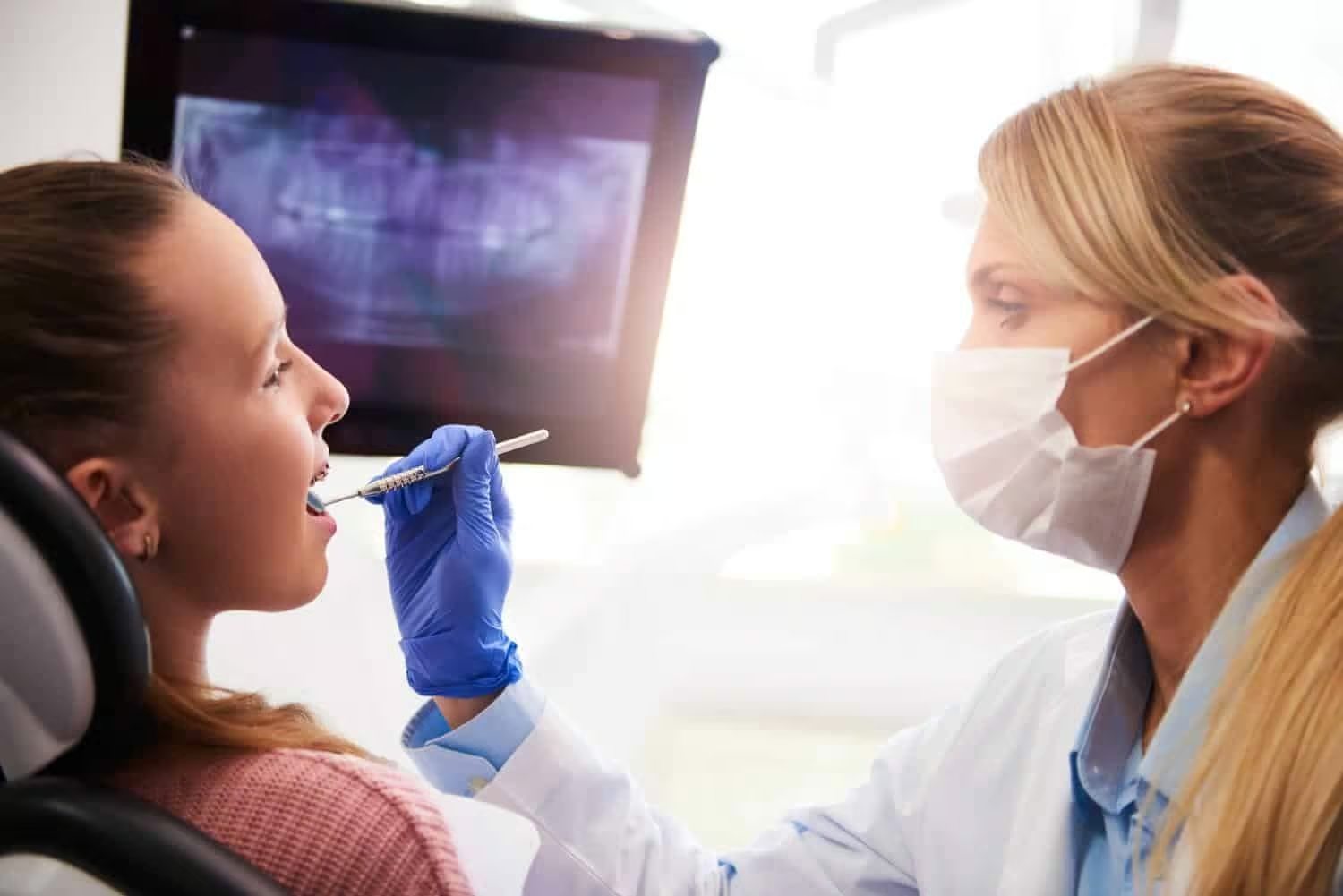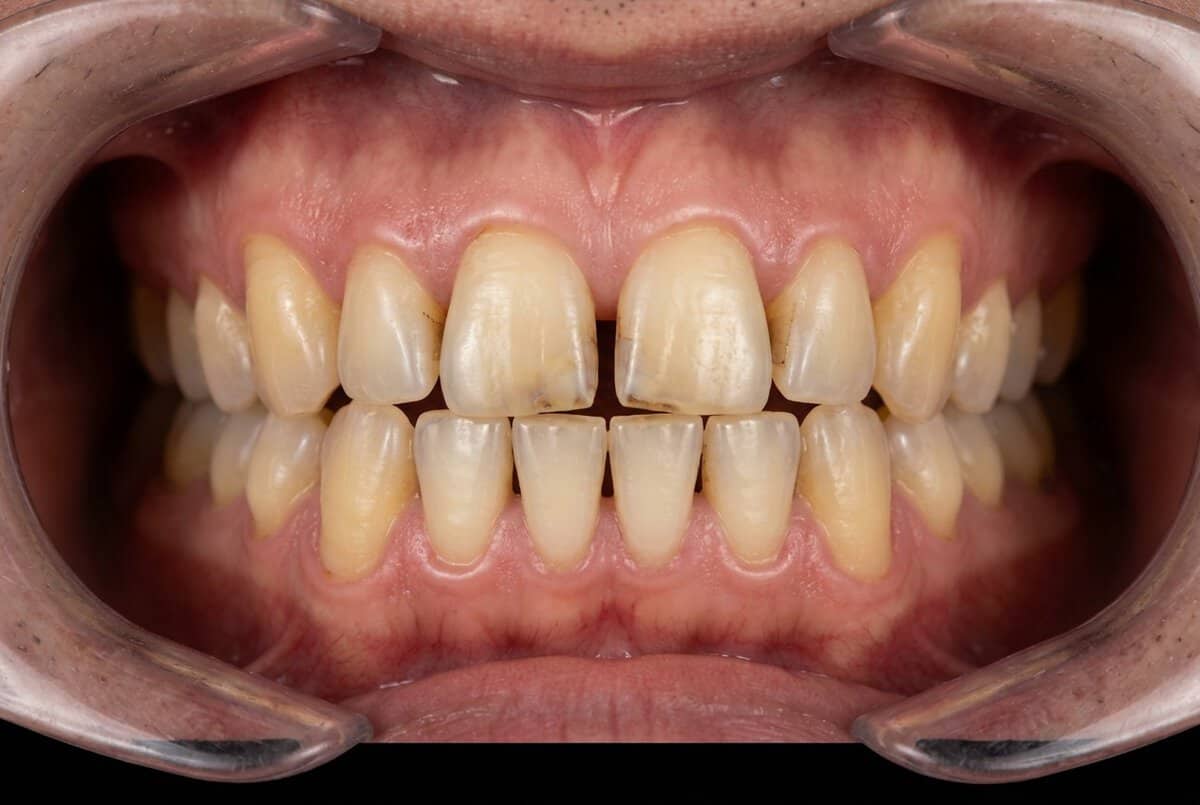

Planning All-on-6 dental implants in Tirana involves more than selecting six fixtures. Patients traveling from abroad need to understand what happens before arrival, what may be completed during the first visit, why temporary fixed teeth differ from the final bridge, and how healing and follow-up are organized. At Implantus Dental Clinic, Dr. Roland Zhuka first confirms whether six implants suit your anatomy and restorative plan before explaining the All-on-6 treatment steps in a realistic sequence.
What Does All-On-6 Treatment Actually Involve?
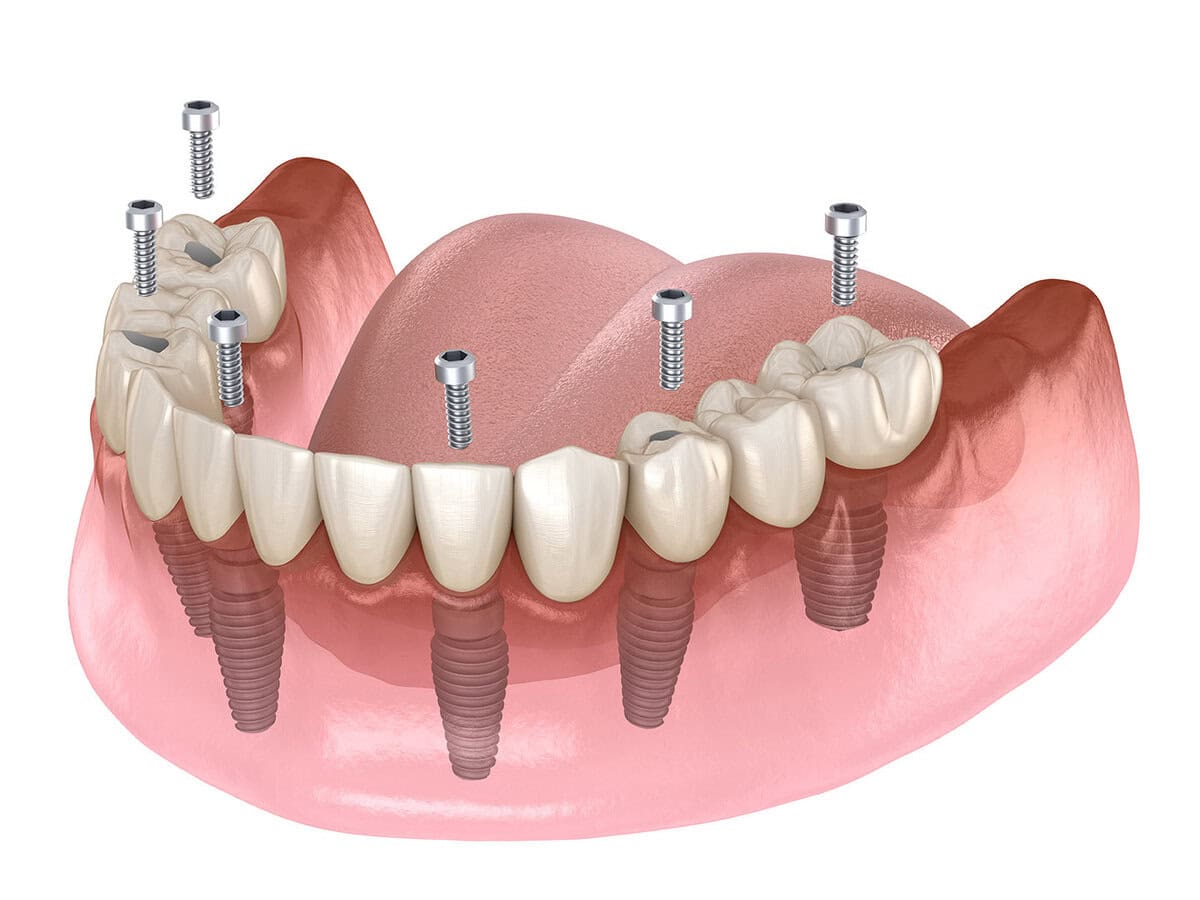
All-on-6 is a full-arch restoration supported by six implants in one jaw. They anchor a bridge replacing a complete row of missing or failing teeth, without an implant for every tooth.
The restoration is fixed, meaning patients do not remove it each night like a conventional denture. However, the bridge still requires cleaning, professional maintenance, and careful attention to the tissues around the implants.
An All-on-6 plan may involve the upper jaw, lower jaw, or both, depending on the condition. Six implants in each treated arch are not the same as six implants for the entire mouth.
Dr. Zhuka offers All-on-6 implant rehabilitation at Implantus in Tirana. The treatment begins with an assessment of what needs replacing and whether a fixed bridge is an appropriate option.
Who May Benefit From Six Implants Per Arch?
All-on-6 may be considered for patients who have lost most teeth in an arch, struggle with unstable dentures, or have remaining teeth that cannot predictably be restored. The dentist must first decide whether some natural teeth can be preserved before planning full-arch extractions.
Sufficient bone at suitable positions is important for conventional implants. Six implants also need adequate spacing and a distribution that works with the proposed bridge, so total bone volume alone does not determine eligibility.
Factors Dr. Zhuka evaluates
- Remaining teeth: Whether extraction is necessary or individual teeth can be treated.
- Jawbone: Available height, width, quality, and nearby nerves or sinuses.
- Gum health: Periodontal inflammation or infection that may require treatment first.
- Bite: How the replacement teeth will meet the opposing arch and handle chewing.
- Medical history: Conditions, medications, or habits that may affect healing.
- Patient priorities: Desired appearance, cleaning ability, travel requirements, and future maintenance.
Being unhappy with removable dentures does not automatically make All-on-6 the correct choice. We discuss the findings and relevant alternatives before recommending surgery.
Why 3D Planning Is Important Before All-On-6 Surgery
Clinical examination shows the condition of teeth and gums, but it cannot reveal every anatomical detail inside the jaw. CBCT imaging provides three-dimensional information about bone and structures that should be protected during implant placement. For a general overview of how implants work, see the Cleveland Clinic guide to dental implants.
Dr. Zhuka uses diagnostic findings to consider possible implant positions and how these positions will support the final bridge. The plan also needs to accommodate the future tooth shapes, bite, and cleaning access beneath the restoration.
At Implantus, digital technology forms part of the clinic’s implant and prosthetic workflow. Our article about implant planning before surgery explains why surgical placement and restorative design must be considered together.
If the scan reveals substantial bone loss, six conventional implants may not be possible at the intended locations. Alternative implant arrangements or additional treatment could be discussed instead of forcing an unsuitable configuration.
All-on-6 Treatment Steps: First Visit, Surgery and Temporary Teeth
For patients coming from another country, the initial visit usually includes final examination, treatment confirmation, implant surgery, and provisional teeth when appropriate. The exact stages depend on which teeth remain and whether the mouth requires preparatory care.
Step 1: confirming the full treatment plan
Our team reviews clinical findings, medical history, imaging, and the proposed final restoration. You can ask why six implants are recommended, which teeth require removal, and what changes might be necessary if conditions differ from the initial estimate.
The discussion also covers the intended appearance and function of your new teeth. Clarifying expectations before surgery helps avoid misunderstandings about provisional restorations and final treatment stages.
Step 2: preparing the arch and placing implants
Teeth that cannot be saved may be removed before or during the surgical stage, depending on the case. Dr. Zhuka then places the implants in positions selected to support the planned bridge while respecting the available anatomy.
Anesthesia and other pain-management arrangements are discussed according to the patient’s clinical needs. Surgery time and recovery vary, especially when extractions or additional procedures are involved.
Step 3: checking stability and the temporary restoration
After placement, the clinician evaluates whether the implants have sufficient initial stability for early loading. If the conditions are favorable, a fixed provisional bridge may be attached soon after surgery.
The temporary teeth provide an appearance and basic function during healing, but they are not the final bridge. If early loading would place excessive stress on the implants, the team may recommend another temporary solution.
Can You Really Leave Tirana With Fixed Teeth?
Implantus offers immediate-loading options for selected full-arch cases, including All-on-6. This means a provisional fixed bridge may be fitted early, sometimes within the first days after implant placement.
The phrase “fixed teeth in 48 hours” should not be understood as complete biological healing or delivery of the permanent restoration. The surrounding bone still needs time to integrate with the implants, and the gums continue to change as healing progresses.
Early loading depends on stability, bone conditions, implant distribution, and control of the bite. A patient needing significant grafting or presenting other complications may follow a delayed protocol instead.
Our overview of implant treatment visits from abroad describes the difference between the surgical trip and the later restorative stage. We confirm your actual schedule after assessment rather than applying one timetable to everyone.
Between Visits: Healing and the Final Restoration
Patients often return home while the implants integrate with the jawbone. During this period, they should follow the diet, hygiene instructions, and follow-up schedule provided by the clinic.
The provisional bridge may need adjustments as swelling reduces and the tissues change. Contact the dental team if the bridge becomes loose, discomfort persists, or the bite feels different.
Once healing is sufficient, another visit allows the team to take the necessary records and complete the definitive restoration. The final bridge is designed and checked for fit, speech, bite balance, appearance, and ease of cleaning. Patients should ask how its individual components can be inspected and repaired later, because long-term serviceability matters as much as initial appearance when the bridge is fitted.
Example travel schedule published by Implantus
For suitable full-arch immediate-loading cases, the clinic’s dental tourism information gives the following planning example. These figures are guidance, not a booking guarantee for every patient.
| Stage | Example timing | Main purpose |
|---|---|---|
| First stay in Tirana | 5–7 days | Examination, surgery, and provisional restoration if appropriate |
| Healing interval | 4–6 months | Osseointegration and tissue recovery |
| Second stay in Tirana | 4–5 days | Definitive bridge and clinical checks |
Additional treatment, slower healing, or a different loading protocol can change the number or length of visits. The clinic’s dental tourism information provides further context for patients arranging travel.
How Implantus Plans The Final Appearance Of Your Teeth
Fixed teeth must be designed for function, but appearance is also part of a successful restoration. Tooth size, gum contours, the smile line, and support for the lips all affect how a full-arch bridge looks.

Dr. Zhuka’s clinic combines restorative planning with Digital Smile Design resources and an in-house dental laboratory. These facilities can support communication between the clinical and technical teams during the development of the restoration.
Digital planning may help patients discuss the intended tooth arrangement before the final bridge is produced. Nevertheless, a visual preview is a guide rather than a guarantee that every anatomical or aesthetic detail can be reproduced exactly.
Our Digital Smile Design information explains how facial proportions and patient preferences can contribute to the planning conversation. The final choice of materials and design also depends on the bite and available restorative space.
Is All-On-6 Always Preferable To All-On-4 Or All-On-8?
Not necessarily, because more implants do not automatically deliver better outcomes. Clinical evidence supports well-planned fixed full-arch restorations with different implant numbers, provided the arrangement suits the patient.
Six implants can be useful when their distribution supports the intended bridge and adequate placement sites are available. Four implants may be appropriate in other circumstances, while eight may be considered for particular restorative plans.
The central issue is not choosing the highest number. For a closer look at the decision, read our All-on-4 versus All-on-6 assessment.
What If You Have Been Told You Lack Enough Bone?
Bone loss can make conventional full-arch treatment more challenging, particularly in the upper jaw. The dentist needs to assess where bone remains and whether implants can be safely placed in useful positions.
Some cases may benefit from grafting or a different implant distribution. Dr. Zhuka also offers zygomatic implant options for selected patients with severe upper-jaw bone loss.
These techniques are not interchangeable, and complex cases may require additional planning or treatment stages. A previous refusal for standard implants does not establish whether another approach will be suitable.
What to Prepare Before Traveling for All-on-6
If you live abroad, an initial exchange of dental records can help our team understand why you are considering full-arch treatment. Information about previous implants, extractions, gum disease, medical conditions, and current medication can be relevant.
Before booking, ask what imaging is needed and whether any recent scans can be reviewed. The clinic may provide preliminary guidance remotely, but final eligibility and implant placement decisions require an appropriate in-person assessment.
It is also sensible to discuss:
- The expected stages of treatment and what each visit includes.
- Whether fixed provisional teeth are a realistic possibility.
- How postoperative checkups will be organized before traveling home.
- Which dietary restrictions apply during the initial healing period.
- Whom to contact if the provisional bridge needs attention abroad.
Planning these details early can make international treatment easier to organize. The schedule should remain flexible enough to accommodate clinical needs.
Looking After All-On-6 Implants Over Time
All-on-6 bridges require cleaning around the implants and underneath accessible areas of the restoration. The clinic may recommend specific brushes, flossing aids, or other tools based on the bridge design.
Regular professional visits allow the team to monitor gum tissues, implant surroundings, the bridge, and how the teeth meet. Even a well-made restoration can develop mechanical or biological problems without appropriate care.
Smoking, untreated gum inflammation, and poor cleaning can increase complications. Patients should report bleeding, swelling, looseness, or unusual discomfort rather than waiting until the next routine appointment.
Frequently Asked Questions
Are six implants enough for a complete arch of teeth?
They can support a full-arch fixed bridge when the implants are appropriately positioned and the patient is suitable. The final recommendation depends on imaging, bone conditions, bite, and restorative planning.
Can All-on-6 replace teeth in both jaws?
Yes, an upper and lower arch may each be treated with an appropriate implant-supported restoration. Each jaw is assessed separately, and the overall surgical sequence depends on the patient’s circumstances.
Will All-on-6 surgery require bone grafting?
Not in every case, because some patients have enough suitable bone for conventional implant placement. Others may need grafting or a different technique after the imaging assessment.
Are the temporary teeth as strong as the final bridge?
No, provisional teeth are designed for the healing stage and may have different material and loading limitations. Follow the clinic’s dietary instructions even if the temporary bridge feels secure.
How long does the All-on-6 treatment take in Tirana?
Implantus publishes a two-visit example for suitable immediate-loading full-arch cases, separated by several months of healing. Your individual schedule may change if additional procedures or longer recovery are needed.
Send Your Dental Records To Start Planning Your Trip With Dr. Roland Zhuka
If you are exploring All-on-6 treatment in Tirana, your existing X-rays and treatment history can help our team prepare for a more useful first discussion. Contact Implantus Dental Clinic to ask which records Dr. Roland Zhuka needs to review before arranging your visit.
- 📧 Email: info@dr-rolandzhuka.com
- 📞 Phone: +355 69 70 44 409
- 📍 Location: Rruga Faik Konica, Tirana 1001, Albania
- 🌐 Contact: Send your inquiry to Implantus