

Dental tourism Albania for severe bone loss begins with detailed planning before the patient travels. A panoramic X-ray may provide the first overview, but complex cases normally require a complete CBCT scan.
Severe bone loss does not always mean dental implants are impossible. It means the implant strategy must match the patient’s anatomy, health, bite, and final restoration.
What Does Severe Bone Loss Mean?
The jawbone supports the teeth and dental implants. When teeth have been missing for a long time, the bone can slowly lose height, width, and density.
Severe bone loss may affect one area, one complete jaw, or both jaws. It can also affect the upper and lower jaws in different ways.
Possible causes include:
- Long-term tooth loss
- Years of removable denture use
- Advanced gum disease
- Previous dental infections
- Failed dental implants
- Traumatic tooth loss
- Previous surgery
- Natural changes in the jaw after extraction
A patient may have enough bone in the front of the jaw but very little bone in the back. Another patient may have good bone width but limited height.
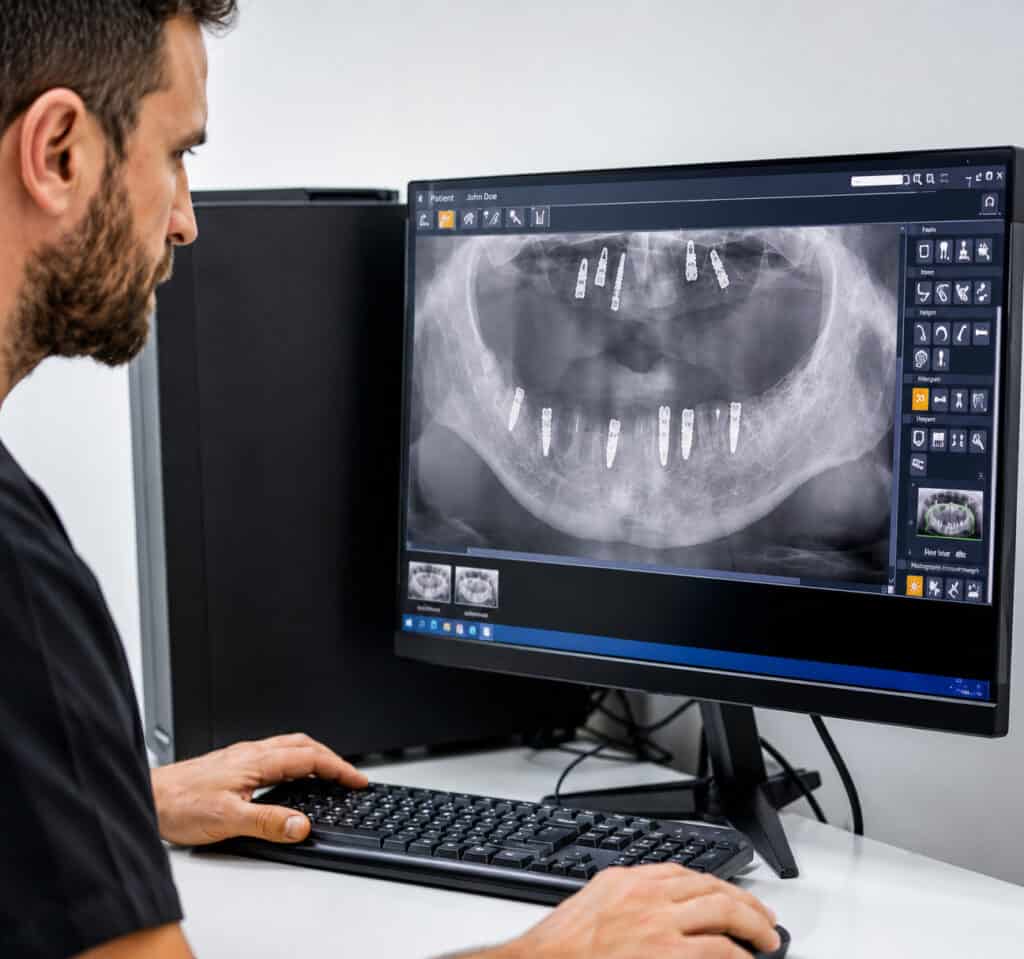
This is why treatment cannot be selected from a panoramic X-ray alone.
Upper Jaw and Lower Jaw Bone Loss Are Different
The upper jaw often has softer bone than the lower jaw. The position of the maxillary sinuses can also reduce the space available for standard implants in the back of the upper jaw.
Severe upper jaw bone loss may require bone regeneration, angled implants, zygomatic implants, pterygoid implants, or a combination.
The lower jaw has different anatomical limits. The dentist must examine the position of the main nerve, the available bone above it, and the shape of the front and back areas.
Zygomatic and pterygoid implants are designed for selected upper jaw cases. They are not used to solve severe lower jaw bone loss.
The First Stage: Online Evaluation
International patients can begin the planning process from home. Implantus may request dental images, photos, medical information, and records of previous treatment.
The first online evaluation may include:
- A panoramic X-ray
- A complete CBCT scan if available
- Clear photos of the teeth and gums
- Photos of existing dentures
- Previous implant records
- Implant passports
- Reports from bone grafting or sinus surgery
- Medical history
- Current medication list
- Information about allergies
- An explanation of the main dental problem
Patients interested in dental tourism in Albania should send the original digital files when possible. Blurred photos of printed X-rays may hide important details.
The online review helps create an initial direction. The final plan is confirmed after an in-person examination in Tirana.
Why a CBCT Scan Is Important
A panoramic X-ray is two-dimensional. It shows both jaws, but it cannot measure the exact width and three-dimensional shape of the bone.
A CBCT scan allows the implantologist to study:
- Bone height
- Bone width
- Bone shape
- Bone density patterns
- Sinus position
- Nasal floor
- Nerve position
- Existing implants
- Failed implant sites
- Areas of infection
- Available anchorage points
International patients should send the complete DICOM files. A screenshot from a CBCT viewer does not contain the full scan.
The clinic may request a new scan if the existing CBCT is unclear or no longer represents the patient’s current condition.
Planning Starts With the Final Teeth
Complex implant planning should not begin by placing implants wherever bone is visible. The dentist must first understand the required position of the final teeth.
This is called prosthetic-driven planning. The final bridge position guides the selection and placement of the implants.
The plan must consider:
- Lip support
- Facial support
- Tooth position
- Bite relationship
- Available cleaning space
- Speech
- Gum visibility
- Chewing forces
- The connection between implants
- The material of the final restoration
An implant can be stable but still be in a poor position for the final bridge. Good planning connects the surgical and prosthetic stages from the beginning.
Main Treatment Options for Severe Bone Loss
Option 1: Bone Regeneration Before Implant Placement
Dental bone grafting may be used when the planned implant position does not have enough supporting bone.
The procedure can increase bone width, height, or both. The type of graft depends on the size and location of the defect.
In some cases, a smaller graft can be completed during implant placement. Larger defects may require a separate grafting stage followed by several months of healing.
A staged grafting plan may involve:
- Bone regeneration
- Healing period
- Implant placement
- Second healing period
- Final fixed restoration
This path may require more time and additional travel. However, it may be the correct option when the planned implant position needs new bone support.
Option 2: Full-Arch Implants Using Available Bone
Some patients still have useful bone in the front or other strategic parts of the jaw. Angled implants may allow the dentist to use this bone while avoiding important anatomical structures.
All-on-4 dental implants are one example of a full-arch concept. Other patients may need six or more implants based on bone condition and prosthetic needs.
The name of the method does not decide the treatment. The number and position of implants must be selected for the individual patient.
A patient should not be promised All-on-4, All-on-6, or another fixed method before the required imaging is reviewed.
Option 3: Zygomatic Implants for the Upper Jaw
Zygomatic implants are longer implants designed for selected patients with severe upper jaw bone loss. They use the zygomatic bone for support rather than relying only on the reduced upper jawbone.
They may be considered when standard implants are not possible and extensive grafting would otherwise be required.
Zygomatic implants can be combined with standard implants when useful bone remains in the front of the upper jaw. Some advanced cases may require more than one zygomatic implant on each side.
This is a specialised surgical technique. The sinus condition, zygomatic anatomy, implant path, soft tissues, and final bridge must all be studied before treatment.
Zygomatic implants do not guarantee immediate fixed teeth for every patient. The decision depends on implant stability and the complete clinical situation.
Option 4: Pterygoid Implants for Posterior Support
Pterygoid implants use dense bone behind the upper jaw. They can provide additional support in the posterior part of a full-arch restoration.
They may be considered when bone below the maxillary sinus is limited. In selected cases, they can reduce the need for a separate sinus lift.
Pterygoid implants are often combined with standard or zygomatic implants. Their position, angle, and relationship with nearby structures require detailed three-dimensional planning.
They are not suitable for every patient with posterior bone loss. The CBCT must show whether the anatomy allows safe placement.
Option 5: A Combination of Implant Types
Severe bone loss is not always equal across the complete jaw. One area may support a standard implant while another needs an advanced implant.
A combined plan may use:
- Standard implants in the front
- Angled implants near the sinus
- Pterygoid implants for posterior support
- Zygomatic implants for severe upper jaw loss
- Bone regeneration in a selected area
Using more than one implant type does not mean the treatment was poorly planned. It may be the most logical way to use the patient’s available anatomy.
Each implant must support the same final prosthetic goal. The distribution must also control bite forces across the full arch.
Can Temporary Fixed Teeth Be Placed Quickly?
Some suitable patients can receive a temporary fixed bridge soon after implant placement. This is called immediate loading implantology.
Immediate loading depends on:
- Primary implant stability
- Number and distribution of implants
- Bone condition
- Type of implant used
- Bite pressure
- Design of the temporary bridge
- General health
- Ability to follow postoperative instructions
A temporary bridge placed within 24 to 48 hours is not the final restoration. The final fixed bridge is normally placed after healing and implant integration.
If the implants do not have enough stability, immediate loading should not be forced. A different temporary solution may be safer.
Medical Health Is Part of the Treatment Plan
Complex implant surgery requires a complete medical review. International patients must provide accurate information before travelling.
Important information may include:
- Diabetes and current control
- Heart conditions
- Blood-clotting disorders
- Blood-thinning medication
- Osteoporosis medication
- Immune system conditions
- Previous radiotherapy
- Previous sinus disease or surgery
- Medicine allergies
- Previous reactions to anaesthesia
- Smoking or nicotine use
Patients should never stop prescribed medication without instructions from the doctor who manages it.
Blood tests or specialist clearance may be required before surgery. The need for these tests depends on the patient’s health and the planned procedure.
Have You Been Told You Do Not Have Enough Bone? 🦷🔍
A previous refusal does not confirm that every implant option is impossible. It means your case needs a detailed review by an experienced implantologist.
Begin your evaluation with Implantus by Dr. Roland Zhuka:
- 🩻 Send your panoramic X-ray
- 🖥️ Upload your complete CBCT files
- 📄 Include records of failed implants or previous bone treatment
- 💊 Share your medical history and medications
- 🦷 Learn which implant strategies may fit your anatomy
- ✈️ Receive an estimated treatment and travel schedule
WhatsApp: +355 69 70 44 409
Email: info@dr-rolandzhuka.com
Location: Rruga Faik Konica, Tirana, Albania



 English
  Italiano
  Shqip
Shqip  Français