

Patients rarely ask me for “veneers” first. They ask me for teeth that look cleaner, younger, more even, or less worn. And very often, what they really want is simple: natural-looking veneers in Albania that improve the smile without making everyone notice dental work.
I understand that fear. Nobody wants teeth that are too white, too flat, too bulky, or identical like piano keys. A beautiful veneer should disappear into the face. It should fit your lips, your skin tone, your age, your personality, and the way you speak.
At Implantus Dental Clinic in Tirana, we plan veneers with the same discipline I use in implant dentistry: diagnosis first, design second, treatment only when the plan makes sense. Our clinic is Albania’s first and only Digital Smile Design certified clinic, and that matters because natural results are not guessed. They are planned.
What Makes Veneers Look Natural?
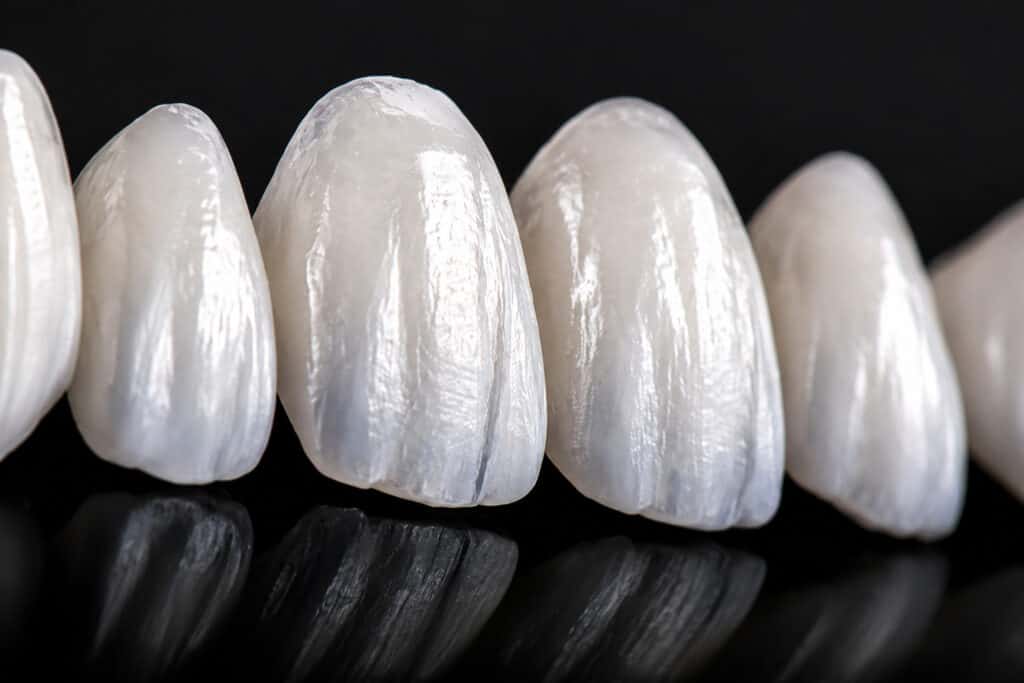
A natural veneer is not just a thin ceramic shell bonded to the tooth. It is a small piece of architecture. The thickness, translucency, texture, edge shape, and color all affect whether the final smile looks real.
Many patients think the secret is choosing a “natural shade.” Shade helps, yes, but it is not enough. I have seen very white veneers look natural because the shape and translucency were correct. I have also seen darker veneers look artificial because they were too bulky or too uniform.
The eye notices symmetry, but the human face is not perfectly symmetrical. So the goal is balance, not copy-paste perfection. Your two central teeth should look related, not cloned. The canines should support the smile, not dominate it.
If you are researching porcelain veneers in Albania, look closely at before-and-after photos. Do the teeth have life? Do they reflect light like enamel? Do they follow the lip line? These details separate cosmetic dentistry from cosmetic exaggeration.
Natural-Looking Veneers in Albania Start With Smile Design
Before touching a tooth, we study the face. Not only the teeth. The face.
We take photos, videos, scans, and bite records. We look at how you smile when you are relaxed, how much gum shows, how your lips move, and whether your bite is damaging your front teeth. This is where many veneer cases succeed or fail.
At Implantus, we use Digital Smile Design in Albania to plan the final result before the final ceramics are made. I completed DSD certification in London under Christian Coachman in 2024, and it has changed the way we communicate with patients.
You should not have to imagine your future smile from a verbal explanation. You should see the direction. In many cases, we can create a mock-up, so you can look in the mirror and judge the shape before we prepare the teeth.
That moment is important. Patients often say, “I like them, but can we make the edges softer?” or “I want them slightly less square.” Good. That is exactly the conversation we need before the final veneers are made.
Who Is a Good Candidate for Veneers?
Veneers work beautifully for the right patient. They can correct discoloration, small gaps, worn edges, minor crowding, short teeth, uneven shapes, old bonding, and teeth that look tired after years of grinding or acidic wear.
But I will not recommend veneers if another treatment is more conservative or more stable. Sometimes whitening is enough. Sometimes Invisalign first gives a better and healthier result. Sometimes a crown is needed because the tooth is too damaged for a veneer.
Are your teeth healthy underneath? That is the first question. Veneers need a clean foundation: no active decay, no untreated gum disease, and no unstable bite forces that will chip the ceramics.
If the teeth are only mildly discolored, we may start with professional teeth whitening in Albania and then veneer only the teeth that still need correction. If the teeth are crowded, Invisalign treatment may reduce how much enamel needs to be adjusted.
E-Max Veneers, Porcelain Veneers, and Material Choice
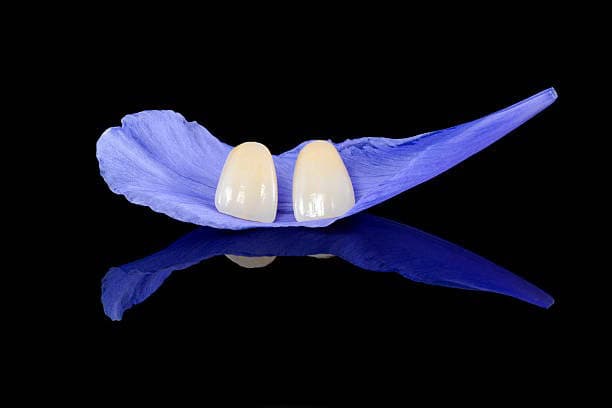
For natural-looking veneers, material matters. At our clinic, we often use E-Max ceramic because it can imitate natural enamel very well. It allows light to pass through in a way that gives depth, not a flat white block.
E-Max is strong, but its real beauty is optical. A good ceramic technician can layer translucency, brightness, and small surface details so the veneer looks like a tooth, not a tile.
In other cases, zirconia may be better, especially if we are masking dark teeth or replacing old crowns. But zirconia and veneers are not the same decision. Each material has its place.
For patients who need a mix of veneers and crowns, we plan both together so the smile does not look like two different treatments. You can read more about our approach to Zirconia and E-Max crowns if some of your teeth are heavily restored or weakened.
How Many Veneers Do You Need?
Not everyone needs 20 veneers. I say this often because patients arrive after seeing social media cases where every visible tooth was covered. Sometimes that is right. Many times, it is not.
If your smile shows mainly the upper front teeth, 6 to 10 veneers may be enough. If you show wider corridors when smiling, we may need to include premolars so the smile does not stop too early.
For lower teeth, the decision depends on visibility, wear, color, and bite. Some patients need upper veneers only. Others need both arches because the lower teeth are very worn or dark compared with the new upper smile.
The number is not chosen by a package. It is chosen by your smile line and your goals. A natural result often comes from doing exactly what is needed, not more.
The Veneer Process at Implantus Dental Clinic
The first appointment is diagnostic. We listen to what bothers you, examine your teeth and gums, take digital records, and discuss realistic options. I want to know what you like, but also what you do not want.
Some patients show me photos of smiles they admire. That helps, but I always explain that copying another person’s teeth rarely works. Your smile must belong to your face.
Step 1: Facial and Dental Analysis
We study tooth proportions, gum levels, midline, bite, lip movement, and facial features. If the gums are uneven, small gum correction may be needed before veneers. If the bite is too aggressive, we need to protect the final ceramics.
This is the clinical part patients do not always see in Instagram videos. But it is the reason veneers last and look calm in the mouth.
Step 2: Digital Smile Design and Mock-Up
With Digital Smile Design, we create a visual plan for the new smile. A mock-up can be placed over your teeth without permanent bonding, giving you a preview of shape and length.
This is where we adjust details. Longer? Softer? More masculine? More delicate? Slightly brighter but not artificial? These decisions are best made before ceramics are produced.
Step 3: Minimal Tooth Preparation
Modern veneers are conservative when planned properly. In many cases, we remove only a small amount of enamel. Sometimes, if teeth are positioned well and the color change is mild, preparation can be extremely minimal.
I do not like aggressive preparation for cosmetic reasons alone. Enamel is valuable. Once removed, it does not come back. The best veneer case respects the tooth.
Step 4: Temporary Veneers
Temporary veneers protect the teeth and allow you to test the shape in daily life. You speak, smile, and take photos. You see how the teeth feel outside the dental chair.
If something bothers you, we want to know before the final bonding appointment. Small changes at this stage can make a big difference.
Step 5: Final Bonding
Bonding veneers is precise work. The tooth surface must be prepared correctly, the ceramic must be treated correctly, and the cement shade must be chosen carefully.
After bonding, we check the bite. This is not a quick cosmetic step. If the bite is wrong, veneers can chip. If the bite is right, they feel stable and natural.
Will My Veneers Look Too White?
This is probably the question I hear most from international patients. Many people want a fresh smile, but they are afraid of the “TV presenter” look.
My answer is always the same: white is not the problem. Wrong white is the problem.
A natural bright smile usually has slight translucency at the edges, soft surface texture, and a shade that works with the skin and eyes. If your natural teeth are very dark, jumping to the brightest shade may look false unless the shape and facial balance support it.
We choose shade with intention. Some patients want a very bright result, and that can be done tastefully. Others prefer a European natural look: clean, elegant, healthy, but not obvious.
Veneers in Albania for Dental Tourism Patients
Many of our patients travel from Italy, the UK, Germany, Switzerland, and other parts of Europe. They come because high-quality cosmetic dentistry in Albania can cost considerably less than in Western Europe, without accepting a careless approach.
Lower price should never mean rushed planning. A veneer case needs time for diagnosis, design, preparation, temporaries, lab work, and final bonding. We organize visits carefully for patients who travel, but we do not skip biological steps.
If you are planning treatment from abroad, our team can review photos and basic information first. You can also read about our dental tourism services in Albania to understand how travel, appointments, and treatment planning usually work.
How Long Do Veneers Last?
Well-made veneers can last many years. I have seen excellent veneer cases remain beautiful for 10 to 15 years and longer when the patient maintains them well and the bite is controlled.
Longevity depends on the material, bonding technique, enamel quality, bite forces, gum health, and habits. If you grind your teeth, you may need a night guard. If you bite nails or open packages with your teeth, veneers will not forgive that behavior forever.
Maintenance is simple but serious. Brush well, floss daily, attend professional cleanings, and come for check-ups. Veneers do not decay, but the tooth underneath still can if hygiene is poor.
Natural-Looking Veneers in Albania vs. Cheap Veneers
Price matters. I know that. Many patients choose Albania because treatment is more affordable. But the cheapest veneer is often the most expensive one to fix.
Cheap veneers usually fail in predictable ways. They look too thick because there was no space planning. They look dead because the ceramic is low quality. They irritate the gums because the margins are rough or too deep.
A good veneer case is not only about the dentist. It also depends on the lab technician, photography, planning software, bonding protocol, and time spent adjusting the details. Natural results require collaboration.
At Implantus, we are known mainly for implantology, full-arch rehabilitation, and complex cases, including dental implants in Albania. That background influences how I approach veneers. I look at the whole mouth, not just the front six teeth.
Why Patients Choose Dr. Roland Zhuka for Veneers in Tirana
I have worked in implantology and cosmetic dentistry for more than 20 years. My training has taken me to Rome, New York, Lisbon, Istanbul, Dubai, Frankfurt, London, and Monaco. Each course sharpened a different part of my clinical eye.
For veneers, my aesthetic training under Dr. Galip Gürel in Istanbul and Digital Smile Design certification in London are especially relevant. But training alone is not enough. The real test is whether the patient smiles naturally after treatment, not only in the dental chair but at dinner, in photos, and in daily life.
I work alongside my wife, Dr. Eliona Prifti, and our team at Implantus Dental Clinic. We see Albanian patients and international patients every week. The expectation is the same for both: dentistry that looks good, feels comfortable, and respects the teeth.
FAQ About Natural-Looking Veneers in Albania
How much do veneers cost in Albania?
The cost depends on the number of veneers, the ceramic material, the complexity of the case, and whether gum correction, whitening, or orthodontic preparation is needed. Albania is often considerably more affordable than the UK, Italy, or Germany, but an exact quote requires photos or an examination.
Can veneers look natural and not fake?
Yes, if they are designed around your face, not just your teeth. Natural-looking veneers need proper shape, translucency, surface texture, and shade selection. The goal is for people to notice your smile, not your dental work.
Do veneers damage your natural teeth?
Veneers require some enamel preparation in many cases, but the amount can be minimal with good planning. I always try to preserve as much tooth structure as possible. If a tooth is too damaged, a crown may be safer than forcing a veneer.
How many days do I need to stay in Tirana for veneers?
Most veneer cases require several appointments, including consultation, design, preparation, temporaries, and final bonding. The exact schedule depends on the number of veneers and lab timing. For dental tourism patients, we plan the visit in advance so the process is efficient without rushing quality.
Are E-Max veneers better than composite bonding?
E-Max veneers are stronger, more stain-resistant, and usually more natural in the long term than composite bonding. Composite can be a good option for small repairs or younger patients, but it may discolor and chip faster. The best choice depends on your teeth and expectations.
Will I need whitening before veneers?
Sometimes yes. If we are placing veneers only on some visible teeth, whitening the surrounding natural teeth can help everything blend better. If all visible teeth are being veneered, whitening may not be necessary.
Ready to See What Your Smile Could Look Like?
If you want natural-looking veneers in Albania, start with a proper plan. Send us clear photos of your smile, tell us what bothers you, and we will guide you honestly on whether veneers, whitening, Invisalign, crowns, or a combination will give the best result.
Contact Implantus Dental Clinic in Tirana for a free quote via WhatsApp or our online form. You can reach us at +355 69 70 44 409 or info@dr-rolandzhuka.com. We will help you understand the options before you travel, before you decide, and before any tooth is touched.



 English
  Italiano
  Shqip
Shqip  Français