

Choosing to have dental implant surgery abroad is a significant decision that requires thorough research and careful consideration. When consulting with Dr. Roland Zhuka at Implantus in Albania—or any implant surgeon—asking the right questions ensures you have complete information to make confident choices about your dental care.
This comprehensive guide covers essential questions across all aspects of implant treatment, from qualifications to aftercare.
Questions About Surgeon Qualifications and Experience
Understanding your surgeon’s background, training, and experience provides confidence in their ability to handle your specific case successfully.
Education and training questions:
- Where did you complete your dental education? – Understanding of foundational training
- What specialized training have you received in implantology? – Additional education beyond general dentistry
- Are you board certified in any dental specialties? – Recognition of advanced qualifications
- Do you participate in continuing education? – Commitment to staying current with advances
- What conferences or workshops do you attend regularly? – Engagement with professional community
- Have you published research or presented at conferences? – Contribution to the field
Experience questions:
- How many years have you been placing dental implants? – Length of time practicing implant dentistry
- How many implant procedures do you perform annually? – Current volume of work
- What types of cases do you typically treat? – Experience with various complexity levels
- Have you treated cases similar to mine before? – Specific experience relevant to your situation
- What is your success rate with implant procedures? – Track record of positive outcomes
- How do you handle complications when they arise? – Problem-solving approach and experience
Advanced technique questions:
- Are you experienced with zygomatic implants? – Expertise in advanced solutions for bone loss
- Do you perform All-on-4 procedures regularly? – Familiarity with full-arch restoration concepts
- What experience do you have with guided surgery? – Use of computer-aided placement
- Can you handle complex bone grafting if needed? – Capability for augmentation procedures
- Do you work with any particularly difficult cases? – Willingness to tackle challenging situations
Dr. Zhuka’s responses to these questions demonstrate his extensive training, years of experience, and specialization in complex implant procedures—factors that have established Implantus as a leading dental implant center in Albania.
Questions About Your Specific Case

Every patient’s situation is unique, and asking the right questions helps ensure the treatment plan truly reflects individual needs and circumstances. Understanding what is happening in your mouth, why the problem developed, and what could happen if it is left untreated allows you to make informed decisions. Discussions usually cover whether any natural teeth can be saved, the condition of the jawbone, and whether there are personal factors that could increase the risk of complications.
Treatment planning questions focus on the recommended approach and the reasoning behind it. Patients are encouraged to understand why a specific plan is proposed, what alternative options exist, and the advantages and limitations of each choice. This stage also clarifies how many implants may be needed, where they will be placed, and whether additional procedures such as bone grafting are required.
Detailed implant-related discussions further explain the type and brand of implants to be used, why they were selected, and how their size and positioning suit the patient’s anatomy. Topics such as computer-guided surgery and the materials chosen for the final teeth are also addressed, helping patients understand not just what will be done, but why each decision is tailored specifically to their case.
Questions About the Treatment Process
Understanding the treatment process step by step helps patients feel more prepared both mentally and practically. Timeline-related questions usually focus on how long the entire treatment will take, how many appointments are required, and how much time each visit may involve. Patients also want to know the healing periods between procedures, when temporary teeth will be placed, and when the final, permanent restoration can be expected.
Questions about the procedure itself help clarify what will happen on the day of implant surgery. These discussions typically include how the surgery is performed, how long it will last, the type of anesthesia or sedation used, and whether the patient will be fully asleep or simply numb. Understanding what sensations to expect and how many surgical steps are involved helps reduce uncertainty and build confidence.
The immediate post-operative period is another important topic of discussion. Patients often ask what they will feel in the first hours and days after surgery, what level of discomfort is normal, which medications will be prescribed, and when they can safely return to work and daily activities. Clear explanations about activity restrictions and follow-up appointments help patients plan ahead, arrange support if needed, and approach recovery with realistic expectations.

Questions About Temporary Teeth
Many patients worry about being without teeth during treatment, so questions about temporary solutions are a natural and important part of the consultation. These discussions usually focus on whether temporary teeth will be available during healing, when they will be provided, how they will look, and how they will be attached.
Patients also want to understand how functional temporary teeth are, what they can eat, and which foods or activities should be avoided to protect the restorations.
Another common topic is immediate loading, often referred to as same-day teeth. Patients ask whether they are candidates for this option, what clinical factors determine eligibility, and whether there are any added risks compared to traditional timing.
Understanding how immediate teeth differ from delayed restorations and what precautions are required helps patients feel reassured, knowing they are unlikely to be left without visible teeth during their treatment journey.
Questions About Final Restorations
The permanent teeth represent the ultimate goal. Understanding what they’ll be like helps ensure alignment between expectations and reality.
Design and aesthetics
- How will you determine the shape and size of my new teeth? – Design process
- Can I have input on how the teeth will look? – Patient involvement in aesthetics
- Will I see a preview before the final teeth are made? – Visualization options
- How natural will the teeth look? – Aesthetic quality expectations
- What color will the teeth be? – Shade selection process
- Can the color be adjusted if I’m not satisfied? – Modification possibilities
Materials and construction
- What materials will my final teeth be made from? – Prosthetic composition
- Why did you choose these materials for my case? – Reasoning behind selection
- How long do these materials typically last? – Expected longevity
- Are the teeth stain-resistant? – Resistance to discoloration
- Can the teeth be repaired if damaged? – Fixability if problems occur
- Are the teeth removable or permanently fixed? – Type of restoration
Functional aspects
- Will I be able to eat normally with the final teeth? – Functional capabilities
- Are there any foods I should avoid? – Dietary restrictions
- Will the teeth feel natural? – Sensory experience
- How will speaking be affected? – Impact on speech
- Will the teeth require special cleaning techniques? – Hygiene requirements
Questions About Costs
Financial transparency is essential for planning and avoiding surprises. Don’t hesitate to ask detailed questions about costs.
Pricing questions
- What is the total cost for the complete treatment? – Comprehensive figure
- What does this price include? – Breakdown of included services
- Are there any additional costs I should anticipate? – Potential extra expenses
- What payment methods do you accept? – Options for paying
- When are payments due? – Payment schedule
- Do you offer payment plans? – Financing options
Cost comparison questions
- How does your pricing compare to similar treatment at home? – Value assessment
- What makes dental implants more affordable in Albania? – Understanding of cost differences
- Are the materials and techniques the same as more expensive locations? – Quality equivalence
- Am I sacrificing quality for lower cost? – Trade-off concerns
Questions About Technology and Materials
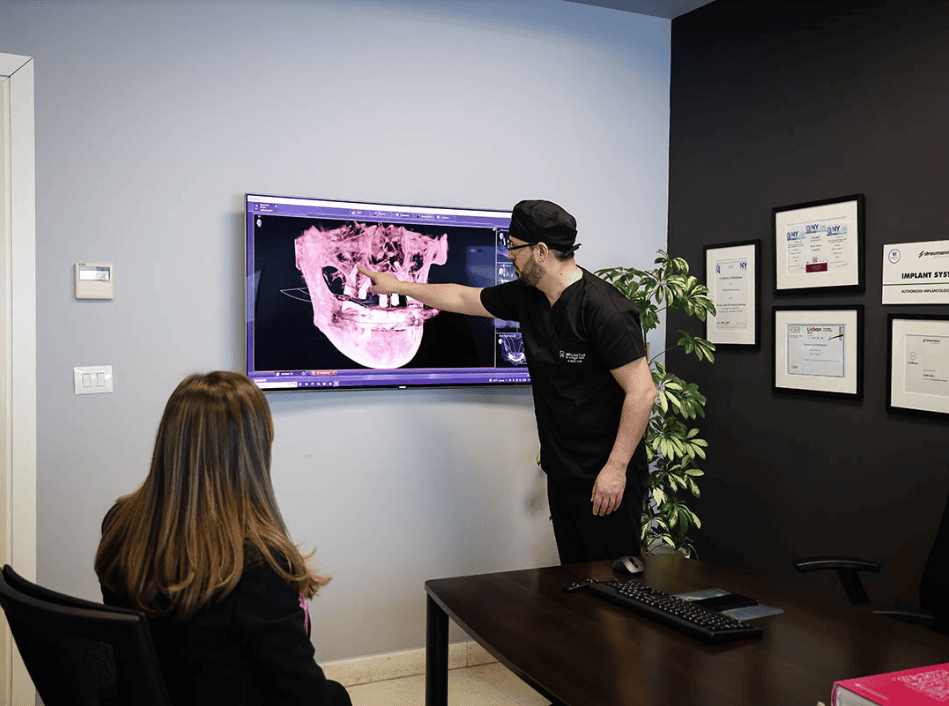
Understanding the technology and materials used in your treatment helps build trust and confidence in the overall approach. Patients often ask about the diagnostic tools involved, such as advanced imaging systems, 3D CT scans, and computer-guided surgery, as well as the use of CAD/CAM technology for digital planning and fabrication.
Knowing how these technologies improve accuracy, safety, and predictability helps patients feel reassured about the quality of care they will receive.
Questions about implant materials are equally important. These usually focus on the implant brand, where the implants are manufactured, why a specific system was chosen, and how well it performs based on clinical research.
Patients also want to know whether the implants meet international regulatory standards, such as FDA approval or CE marking, and what type of titanium or surface treatment is used to support long-term integration and stability.
Prosthetic materials are another key topic of discussion. Patients often explore the different options available for final teeth, how these materials compare aesthetically and functionally, and which choice is most suitable for their specific case.
Understanding that Implantus uses premium European and American implant systems and high-quality restorative materials helps explain the consistently high success rates and long-term outcomes achieved.
Questions About Safety and Complications
While implant surgery has high success rates, understanding potential risks and how they’re managed is important for informed consent.
General safety questions
- What is the success rate for implant procedures generally? – Overall statistics
- What is your personal success rate? – Individual track record
- What are the most common complications? – Frequent issues
- How do you minimize risk of complications? – Prevention strategies
- What safety protocols do you follow? – Infection control and standards
Specific risk questions:
- What are the specific risks for my case? – Individual risk factors
- Are there any factors that increase my risk? – Personal health considerations
- What are the signs of a problem after surgery? – Warning symptoms
- How quickly do complications usually become apparent? – Timeline for issues
- What is your emergency contact procedure? – Access if problems develop
Complication management:
- How do you handle complications if they occur? – Problem resolution approach
- What happens if an implant doesn’t integrate? – Failure management
- Will I need additional procedures if something goes wrong? – Revision options
- Who pays for treatment of complications? – Financial responsibility
- Do you have hospital privileges if needed? – Access to advanced care if necessary
Questions About Aftercare and Maintenance
Long-term success requires proper aftercare. Understanding maintenance requirements helps you commit to protecting your investment.
Immediate aftercare
- What should I do in the first 24-48 hours after surgery? – Immediate care instructions
- What pain management strategies do you recommend? – Comfort measures
- When can I brush my teeth? – Hygiene resumption
- What should I eat during the initial healing? – Dietary guidelines
- What activities should I avoid? – Restriction details
- When can I return to exercise? – Activity resumption timeline
Long-term care
- How do I care for implants long-term? – Daily maintenance routine
- Are there special tools I need? – Required hygiene implements
- How often do I need professional cleanings? – Appointment frequency
- What signs should prompt me to contact you? – Warning symptoms
- How long do implants typically last with proper care? – Longevity expectations
Ongoing monitoring
- Will I need regular X-rays? – Monitoring schedule
- How often should I be seen for check-ups? – Follow-up frequency
- Can my regular dentist provide ongoing care? – Coordination with home dentist
- What information should I give my home dentist? – Communication details
- Will you provide documentation of my treatment? – Records for ongoing care
Understanding that you’ll need to maintain implants like natural teeth through good hygiene and regular check-ups ensures realistic expectations.
Conclusion: Empowered Decision-Making Through Questions
Asking thorough questions serves multiple purposes: it provides the information you need to make informed decisions, it helps you assess the surgeon’s expertise and communication style, and it ensures alignment between your expectations and what treatment will actually deliver.
Dr. Roland Zhuka at Implantus welcomes comprehensive questioning. His willingness to provide detailed, honest answers reflects confidence in his abilities and commitment to patient satisfaction. Don’t hesitate to ask any question that concerns you—no inquiry is too small or insignificant if it helps you feel confident about proceeding with treatment.
Remember that the best dental implant outcomes result from partnerships between informed patients and skilled clinicians. Your questions form the foundation of that partnership. By seeking clarity on qualifications, processes, costs, risks, and expectations, you position yourself for a successful treatment experience and outstanding long-term results.
Your smile transformation begins with knowledge. Ask questions, seek understanding, and move forward with confidence knowing you’ve made a fully informed decision about one of the most important investments in your health and happiness.





 English
  Italiano
  Shqip
Shqip  Français