

Have you been told you are not a candidate for traditional dental implants due to severe bone loss? Dr. Roland Zhuka specializes in advanced zygomatic implant solutions designed for complex full-arch rehabilitation cases.
What Are Zygomatic Implants and How Do They Work?
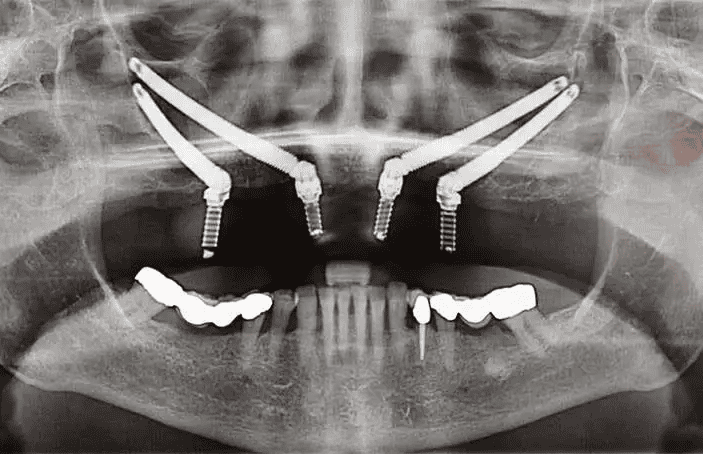
Zygomatic implants are advanced dental implants designed for patients with severe bone loss in the upper jaw. Unlike traditional implants that anchor into the maxillary bone, zygomatic implants are placed into the zygomatic bone — commonly known as the cheekbone — which offers stronger and denser support.
These implants are longer than standard dental implants and are strategically angled to bypass areas with insufficient bone. This allows patients who were previously told they are not candidates for implants to receive a stable, fixed full-arch restoration.
How Do Zygomatic Implants Work?
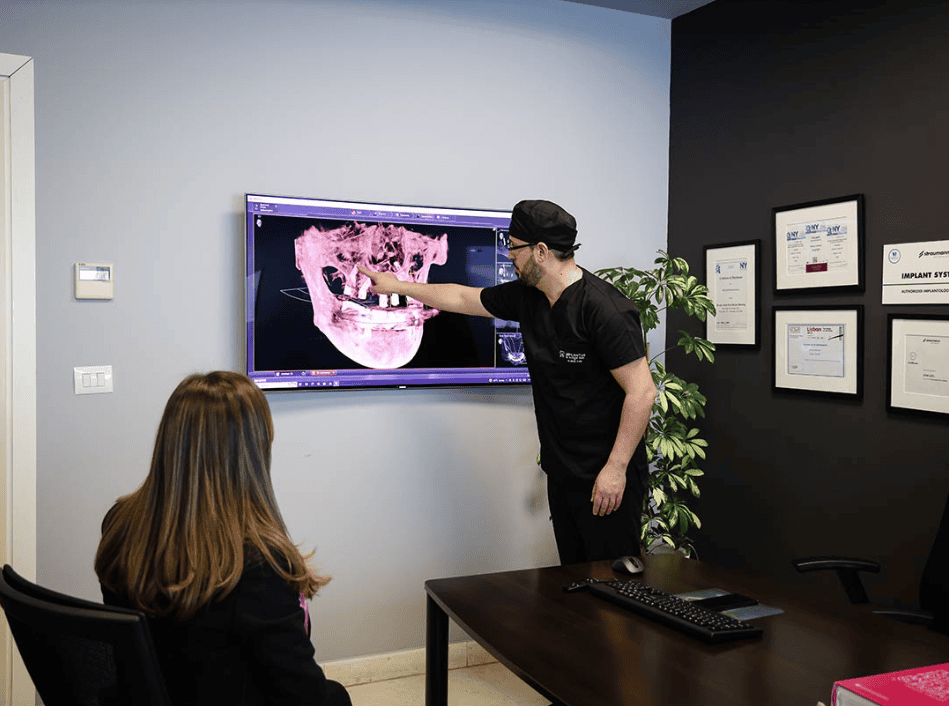
The procedure begins with detailed 3D CBCT planning to map bone structure and anatomical landmarks. During surgery, the implants are carefully inserted into the cheekbone, providing immediate structural anchorage.
Once primary stability is achieved, a temporary fixed bridge can often be attached within 24–48 hours. Over the following months, the implants integrate with the bone, creating a durable foundation for the final prosthesis.
Zygomatic implants expand treatment possibilities for complex cases, offering a predictable solution when conventional implant methods are not sufficient.
Fact #1: Zygomatic Implants Are Designed for Severe Upper Jaw Bone Loss
The Problem Most Patients Face
Severe bone loss in the upper jaw is one of the main reasons patients are told they are not candidates for traditional dental implants. Over time, missing teeth, gum disease, or long-term denture use can cause the upper jawbone to shrink significantly.
When this happens, standard implants may not have enough bone to anchor securely. In many cases, patients are advised to undergo complex bone grafting procedures — or worse, are told implants are not possible.
The Advanced Solution
Zygomatic implants were specifically developed for these complex situations. Instead of relying on the weakened upper jawbone, they anchor into the dense zygomatic (cheek) bone, which remains strong even in cases of advanced maxillary bone resorption.
This approach eliminates the limitations caused by bone deficiency and opens the door to fixed full-arch restoration.
Why This Changes Everything
- Designed for patients with extreme upper jaw bone loss
- Often eliminates the need for major bone grafting
- Provides strong structural support from the cheekbone
- Allows rehabilitation in cases previously considered untreatable
- Creates new treatment opportunities for complex implant cases
Zygomatic implants are not a compromise — they are a purpose-built solution for severe bone loss in the upper jaw.
Fact #2: They Anchor into the Cheekbone, Not the Jawbone
Why Traditional Anchoring Fails in Severe Cases
Standard dental implants rely on the upper jawbone (maxilla) for support. When this bone becomes too thin or resorbed, it cannot provide the stability required for long-term implant success.
In advanced bone loss cases, placing implants in the weakened jawbone may not be predictable without extensive grafting. This is where zygomatic implants offer a fundamentally different solution.
The Power of the Cheekbone
Zygomatic implants are anchored into the zygomatic bone — commonly known as the cheekbone — which is denser and structurally stronger than the upper jawbone. Unlike the maxilla, the cheekbone typically maintains its volume even after years of tooth loss.
By utilizing this stable anatomical structure, the implants gain immediate and reliable support.
What This Means for Patients
- Strong anchorage in dense, stable bone
- Bypasses areas affected by bone resorption
- Reduces dependence on bone grafting procedures
- Improves primary stability for immediate loading
- Expands eligibility for full-arch implant rehabilitation
This unique anchoring method is what makes zygomatic implants a breakthrough solution for patients with severe upper jaw bone loss.
Fact #3: Bone Grafting Is Often Not Required
Why Bone Grafting Is Common in Traditional Implants
When the upper jaw does not have enough bone volume, traditional implants often require bone grafting to rebuild lost structure. This adds surgical stages, increases healing time, and extends the overall treatment timeline.
For many patients, grafting can mean several additional months before implants can even be placed.
How Zygomatic Implants Change the Approach
Zygomatic implants are designed to bypass the resorbed upper jawbone entirely. By anchoring into the dense cheekbone, they eliminate the need to rebuild bone in many severe cases.
This means treatment can move forward without waiting for graft integration.
What This Means for You
- Avoids complex bone grafting surgeries in many cases
- Shortens overall treatment time
- Reduces additional surgical stages
- Allows faster progression to fixed teeth
Fact #4: Immediate Fixed Teeth May Be Possible
The Biggest Fear: Walking Without Teeth
One of the main concerns patients have before advanced implant surgery is the idea of leaving the clinic without teeth. For many, the thought of wearing removable dentures during healing is uncomfortable and discouraging.
This is where zygomatic implants can completely change the experience.
How Immediate Loading Becomes Possible
Because zygomatic implants anchor into dense cheekbone, they often achieve strong primary stability on the day of surgery. When stability criteria are met, a temporary fixed bridge can be attached within 24–48 hours.
This allows patients to transition directly from surgery to having fixed teeth.
Why This Is a Major Advantage
- Leave the clinic with fixed temporary teeth
- Avoid removable dentures during healing
- Restore smile and confidence immediately
- Shorten the overall rehabilitation timeline
- Maintain facial support and function from day one
Immediate fixed teeth are not guaranteed in every case, but when clinically appropriate, they significantly improve both the functional and psychological recovery process.
Fact #5: The Procedure Requires Advanced Surgical Expertise
Zygomatic implants are among the most technically demanding procedures in modern implantology. Their placement involves long implants, complex angulation, and precise navigation through deep anatomical structures — making surgical expertise absolutely critical.
Unlike conventional implants, this technique requires advanced 3D planning, in-depth anatomical knowledge of the sinus and orbital regions, and controlled surgical execution. Even minor deviations in positioning can affect stability and long-term prosthetic alignment.
Why Experience Matters
- Precise angulation toward the zygomatic bone
- Safe navigation around sinus and facial structures
- Strong primary stability for immediate loading
- Accurate prosthetic-driven planning
- Reduced risk of surgical complications
Zygomatic implants are not a standard procedure — they demand a high level of surgical training, experience, and advanced case management to ensure predictable, long-lasting results.
Fact #6: Long-Term Success Depends on Precision Planning and Experience
Zygomatic implants are not just about placing longer implants — they are about executing a highly strategic, precision-based treatment plan. Long-term success depends on detailed 3D analysis, accurate angulation, proper load distribution, and prosthetic-driven surgical planning from the very beginning.
At Implantus, Dr. Roland Zhuka emphasizes that predictable outcomes start with meticulous digital preparation and clinical experience in complex full-arch rehabilitation. Every case is evaluated individually to ensure that implant positioning, stability, and prosthetic alignment work together as one coordinated system.
Why Planning and Experience Matter
- Accurate 3D CBCT bone evaluation before surgery
- Prosthetic-first treatment planning approach
- Controlled surgical execution for optimal stability
- Balanced force distribution for long-term durability
- Continuous follow-up and structured maintenance
Final Thoughts: Is This the Right Solution for You?
Have you been told you do not have enough bone for dental implants? Zygomatic implants may be the breakthrough solution that restores fixed teeth — even in the most complex upper jaw cases.
At Implantus, Dr. Roland Zhuka provides advanced 3D evaluation and precision-based treatment planning to determine whether you are a candidate for this life-changing procedure. Every case is analyzed individually to ensure safety, stability, and long-term success.
Take the Next Step
- Book a consultation
- Receive a detailed 3D CBCT evaluation
- Get a personalized treatment plan
- Understand your options clearly before making a decision
Do not let severe bone loss limit your options. Contact Implantus today and discover whether zygomatic implants are the right solution to restore your smile with confidence and stability.



 English
  Italiano
  Shqip
Shqip  Français