

Computer-guided dental implants in Albania begin long before the surgery appointment. A complex implant case should never depend on guesswork, because the final result depends on bone, bite, gum line, implant position, and the design of the teeth.
At Implantus by Dr. Roland Zhuka, complex cases are planned in detail before surgery day, so patients know the reason behind every step. This makes the treatment clearer, safer, and more focused on fixed teeth that look natural and function correctly.
Why Complex Implant Planning Matters
Complex implant cases are different from simple single tooth replacement. They often include missing teeth, severe bone loss, old crowns, unstable dentures, gum recession, bite collapse, or previous failed dental work.
When several problems appear together, the dentist cannot plan one implant at a time. The full mouth has to be studied as one system.
Planning matters because it helps answer important questions:
- Where is the strongest bone.
- Which teeth can be saved.
- Which teeth should be removed.
- Which implant type is needed.
- Can the patient receive fixed temporary teeth.
- How will the final bite close.
- How will the final smile look natural.
Step 1: Listening To The Patient First
The first step is understanding why the patient is asking for treatment. Some patients want to replace removable dentures, while others want to fix old bridge work or avoid losing more teeth.
This conversation is important because two mouths can look similar on an X ray but require different plans. A patient who travels from abroad also needs a timeline that fits travel, healing, and final restoration.
We ask about:
- What bothers the patient most.
- Whether the priority is chewing, aesthetics, or both.
- Past dental treatments.
- Denture history.
- Medical conditions.
- Travel availability.
- Expectations for fixed teeth.
Step 2: Reviewing X Rays And Diagnostic Records
Before surgery day, the clinic studies the available diagnostic information. A panoramic X ray can show missing teeth, old implants, bone height, infection signs, and the general condition of the jaws.
For complex cases, more detailed imaging may be needed. The goal is to see the anatomy clearly before choosing the surgical plan.
Diagnostic review can help identify:
- Bone loss in the upper or lower jaw.
- Sinus position.
- Nerve position.
- Remaining tooth stability.
- Hidden infection.
- Failed root canal treatments.
- Old implants or prosthetics that affect the new plan.
Step 3: Studying The Bone In Three Dimensions
Complex dental implants are not planned only from the front view. The dentist needs to understand bone width, height, density, and angle.
This is especially important for zygomatic implants, pterygoid implants, All-on-4, All-on-6, All-on-8, and immediate loading cases. Small changes in position can affect the final prosthesis and the bite.
The bone study answers questions such as:
- Can standard implants be placed safely.
- Is the posterior upper jaw too thin.
- Is the sinus blocking implant placement.
- Is the cheekbone needed for support.
- Is pterygoid anchorage useful.
- Can implants support fixed teeth quickly.
- Does the case require staged healing.
Step 4: Deciding The Right Implant Strategy
After the diagnostic review, Dr. Roland Zhuka chooses the implant strategy that fits the patient’s anatomy. The plan may involve standard implants, immediate loading implants, zygomatic implants, pterygoid implants, or a combination.
The chosen strategy should support the final teeth, not just fill bone spaces. A good plan begins with the final restoration in mind.
Possible strategies include:
- Standard implants for areas with enough bone.
- All-on-4 for selected full arch cases.
- All-on-6 when additional distribution is needed.
- All-on-8 for selected cases with stronger support needs.
- Zygomatic implants for severe upper jaw bone loss.
- Pterygoid implants for posterior upper jaw support.
- Bone grafting or sinus lift when they are the better option.
Step 5: Planning The Smile Before The Surgery
The best implant position is the one that supports the smile correctly. This is why the teeth are planned before surgery day, especially in full mouth cases.
The clinic studies tooth length, gum display, lip support, face shape, smile curve, and bite height. A restoration that looks expensive and natural is planned from the beginning.
This planning helps avoid:
- Teeth that look too bulky.
- A smile that looks too flat.
- Gum lines that look artificial.
- Teeth that are too white for the face.
- A bite that feels heavy.
- Speech problems caused by poor tooth position.
Step 6: Planning The Bite
The bite is one of the most important parts of complex implant treatment. If the bite is wrong, even beautiful teeth can feel uncomfortable.
Dr. Roland Zhuka studies how the upper and lower teeth meet. This helps protect the implants and gives the final restoration a more natural function.
Bite planning looks at:
- How the jaw closes.
- Where chewing pressure is strongest.
- Whether old tooth wear changed the bite height.
- Whether dentures caused a collapsed bite.
- Whether the final teeth need more vertical support.
- Whether the patient grinds or clenches.
- How force will be shared across the implants.
Step 7: Choosing Immediate Or Delayed Loading
Not every patient receives the same loading protocol. Some patients can receive fixed temporary teeth soon after implant placement, while others need healing first.
This decision is made before surgery when possible. It depends on bone quality, implant stability, number of implants, bite pressure, and the final prosthetic design.
Immediate loading may be considered when:
- Implants can reach strong initial stability.
- The bite can be controlled.
- The patient follows soft diet instructions.
- The temporary teeth are designed to protect the healing.
- The case has enough support for safe function.
Step 8: Preparing The Temporary Teeth
For international patients, temporary teeth are a major part of the treatment experience. They help patients speak, smile, and live more comfortably while healing continues.
The temporary restoration must not be treated as an afterthought. It has to be planned to protect the implants and guide the final result.
Temporary teeth can help with:
- Aesthetic confidence after surgery.
- Speech adaptation.
- Bite testing.
- Gum shaping.
- Protection during healing.
- Previewing the final tooth arrangement.
Step 9: Working With the In-House Dental Laboratory
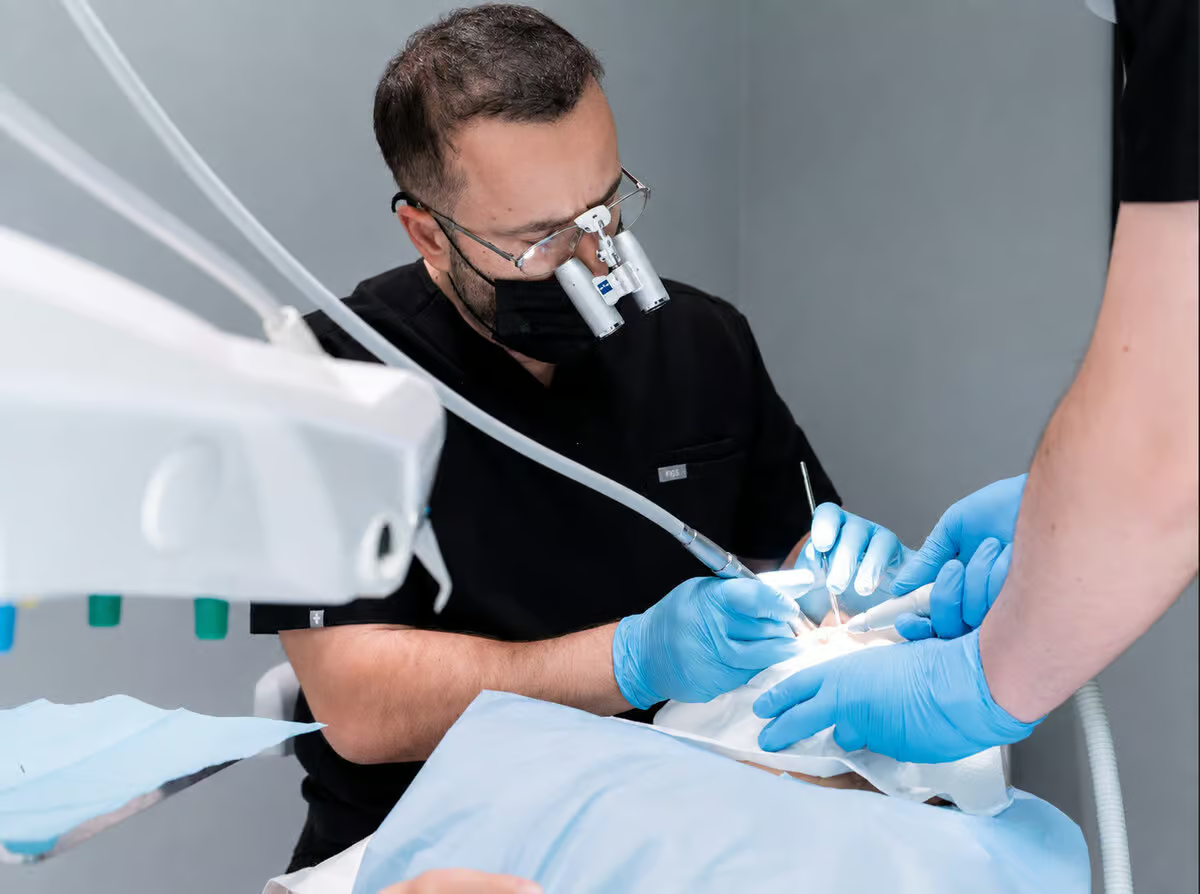
A complex implant case needs close communication between the surgical plan and the laboratory plan. The in house dental laboratory at Implantus helps connect these steps more efficiently.
The laboratory plays a key role in designing temporary and final teeth. This can improve timing, adjustments, and the connection between function and appearance.
The lab helps with:
- Smile design.
- Temporary fixed restorations.
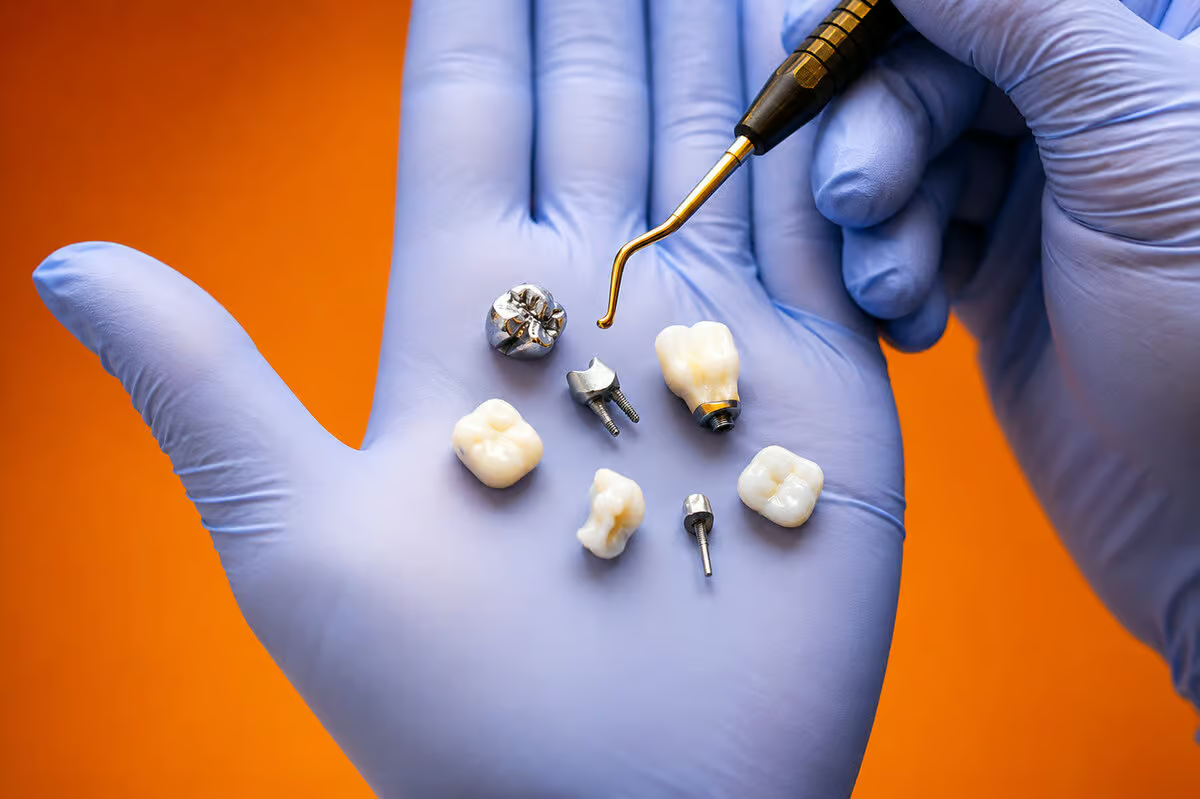
- Final prosthetic design.
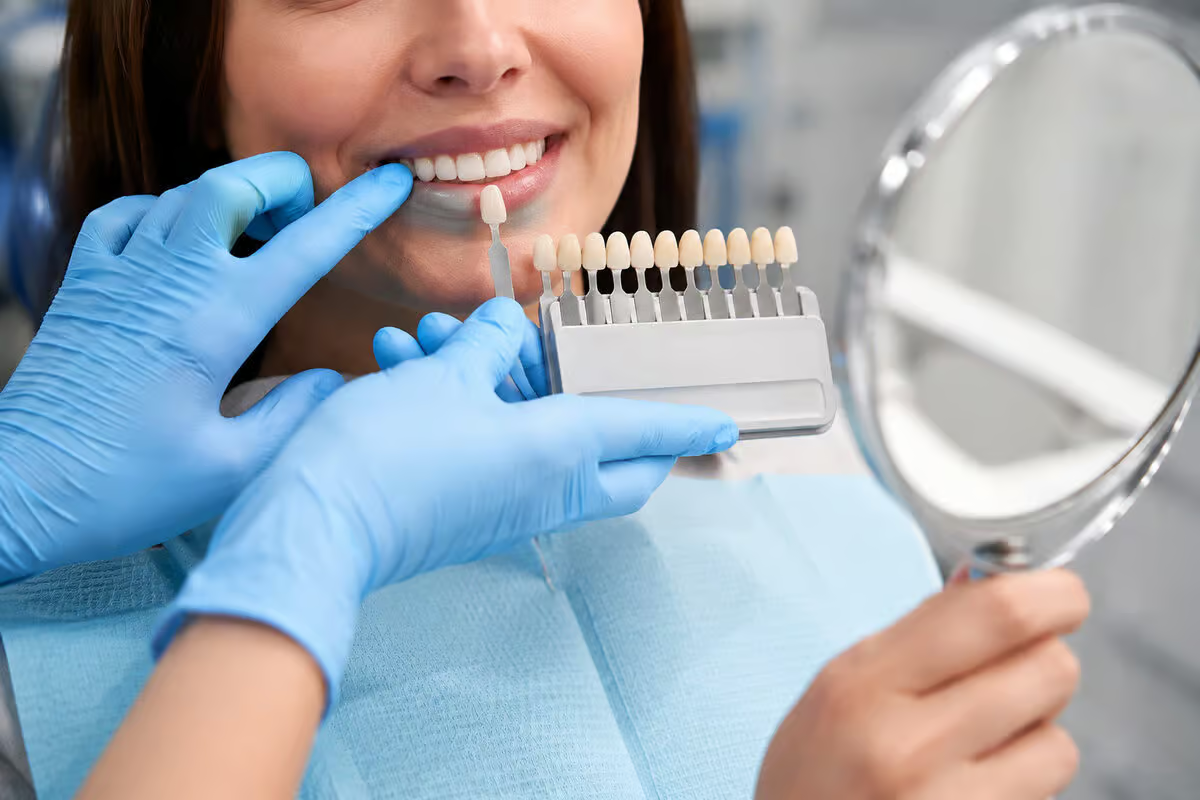
- Tooth shape and shade selection.
- Bite adjustment planning.
- Digital workflow support.
- Customization for the patient’s face.
Step 10: Preparing For Surgery Day
Surgery day should not feel like the first day of planning. By the time the patient arrives for treatment, the clinic should already understand the case direction.
The surgical plan includes implant types, implant positions, expected extractions, temporary teeth plan, anesthesia or sedation needs, and postoperative instructions.
Preparation may include:
- Final review of the treatment plan.
- Medical history confirmation.
- Discussion of comfort options.
- Review of the temporary teeth plan.
- Explanation of healing instructions.
- Scheduling of follow-up visits.
- Travel timing for international patients.
Why Digital Planning Helps International Patients
International patients need clarity before traveling. They want to know whether their case is possible, how long they may stay, and what type of fixed teeth they can expect.
Computer-guided dental implants in Albania make the planning process more organized. Digital information helps the clinic explain the treatment in a more visual and structured way.
For dental tourism patients, this can mean:
- Better understanding before travel.
- More realistic timelines.
- Fewer surprises during the visit.
- More efficient communication.
- Better planning for temporary and final teeth.
- More confidence in complex treatment decisions.
How Planning Reduces The Risk Of A Fake Looking Smile
A fake-looking implant smile is usually not caused by one mistake. It can happen when tooth size, gum design, bite height, and facial support are not planned together.
This is why complex implant treatment should not be rushed. The final teeth need to fit the patient’s face, not only the dental arch.
Good planning helps create:
- More natural tooth proportions.
- Better gum transition.
- Proper lip support.
- A smile line that fits the face.
- A bite that feels stable.
- A result that does not look oversized or artificial.
Why Dr. Roland Zhuka Plans Around Function First
A beautiful smile must work. If the patient cannot chew comfortably, speak clearly, or maintain hygiene, the result is not complete.
This is why functional planning is central to complex implant cases. The implant position, prosthesis shape, bite, gums, and bone support all work together.
Function-focused planning protects:
- Implant stability.
- Jaw comfort.
- Chewing efficiency.
- Speech comfort.
- Gum health.
- Long term maintenance.
What Patients Should Ask Before Surgery
Patients should feel informed before surgery day. A confident treatment plan is easier to follow when the patient understands the purpose of each step.
Before starting complex dental implants, ask direct questions. The answers can help you compare clinics and avoid unclear treatment promises.
Important questions include:
- Which implant types do I need and why.
- Can my case be treated with fixed teeth.
- Do I need bone grafting or sinus lift.
- Can I receive immediate temporary teeth.
- How will my bite be planned.
- What materials will be used for the final teeth.
- How many visits will I need in Albania.
- What happens during healing.
Final Thoughts
Complex implant surgery should be planned before the patient sits in the surgical chair. The more complex the case, the more important the planning becomes.
At Implantus by Dr. Roland Zhuka, the process focuses on diagnosis, digital planning, bite analysis, prosthetic design, and the patient’s long term comfort. This is what turns a difficult case into a clear treatment path.
If you are searching for computer guided dental implants in Albania, start with a detailed case review. The right plan can help you understand whether fixed teeth, immediate loading, zygomatic implants, pterygoid implants, or a full mouth reconstruction is right for you.

Contact Us And Start With A Free Online Quote
- Send us your panoramic X ray, recent dental photos, or previous treatment information so we can study your case before you travel.
- Speak directly with our clinic about your options for dental implants in Albania, fixed teeth, bone loss treatment, or full mouth rehabilitation.
- Receive clear treatment guidance before booking flights, so you know what can be done, how many visits may be needed, and what the expected steps are.
- Plan your dental tourism trip to Tirana with practical support for appointments, transport, accommodation guidance, and treatment timing.
- Choose a clinic focused on complex implantology, advanced digital planning, natural looking prosthetics, and strong functional results.
- Call or message us on WhatsApp at +355 69 70 44 409.
- Email us at info@dr rolandzhuka.com.
- Visit Implantus by Dr. Roland Zhuka in Tirana, Albania.


 English
  Italiano
  Shqip
Shqip  Français