

Replacing old veneers with E-Max veneers in Albania can often be completed during one trip of about five to seven days. However, the exact timeline depends on the condition of the teeth below the old veneers.
The old restorations must first be removed and the natural teeth examined. Only then can the dentist confirm whether new E-Max veneers are the correct treatment.
Why Do Old Veneers Need to Be Replaced?
Dental veneers are not permanent for life. They may need replacement after years of daily use or because of a problem with their fit, appearance, or supporting teeth.
Common reasons for replacement include:
- Cracked or chipped veneers
- Loose veneers
- Worn edges
- Changes in the gum line
- Dark margins near the gums
- An unnatural or bulky shape
- Poor colour matching
- Problems with the bite
- Decay below or around the veneers
- A desire for a more natural smile design
Ceramic veneers normally resist staining better than composite veneers. However, the teeth, bonding material, and veneer margins may change over time.
Replacing old veneers should not focus only on making the teeth brighter. The dentist must also check function, tooth health, gum condition, and bite balance.
Is Replacing Veneers the Same as Getting Them for the First Time?
No. Veneer replacement is usually more complex than first-time veneer treatment.
During the first treatment, the dentist works directly with the natural teeth. During replacement, the dentist must first remove the old material without causing unnecessary damage to the tooth below it.
The condition of the prepared teeth may not be fully visible before the old veneers are removed. X-rays and scans provide useful information, but the final condition can only be confirmed after removal.
This is why an online treatment plan is always an initial plan. The final plan is confirmed during the clinical examination in Tirana.
What Are E-Max Veneers?
E-Max veneers are thin ceramic restorations made from lithium disilicate. This material combines strength with optical properties that can imitate natural tooth enamel.
E-Max is available in different shades and levels of translucency. This allows the dentist and dental technician to control brightness, colour, and the amount of natural tooth shade that remains visible.
Patients can learn more about dental veneers in Albania before planning their replacement treatment.
E-Max veneers are not automatically suitable for every tooth. The remaining enamel, tooth colour, bite, and amount of previous preparation must first be evaluated.
Who May Be Suitable for E-Max Veneer Replacement?
A patient may be suitable when the natural teeth below the old veneers remain healthy and have enough structure to support new bonded restorations.
Good candidates often have:
- Healthy teeth below the old veneers
- Stable gum health
- Enough enamel for bonding
- A balanced bite
- Realistic expectations
- No untreated decay
- No active gum disease
- No severe uncontrolled teeth grinding
The dentist must examine every tooth separately. One tooth may be suitable for a veneer while another may require a different restoration.
The E-Max Veneer Replacement Procedure
Replacing old veneers requires several connected stages. Each stage affects the fit, appearance, and stability of the final result.
Step 1: Online Evaluation Before Travelling
The process can begin before the patient travels to Albania. The clinic may request clear photos, a panoramic X-ray, and information about the existing veneers.
Patients should also explain:
- When the old veneers were placed
- Which material was used, if known
- Whether any veneers feel loose
- Whether there is pain or sensitivity
- Whether the bite feels uncomfortable
- Whether previous root canal treatment was completed
- What they want to change about the current smile
This information helps the clinic estimate the treatment time. It cannot confirm the final plan without an in-person examination.
Step 2: Clinical Examination in Tirana
The first appointment includes an examination of the veneers, gums, bite, and surrounding teeth. X-rays or other imaging may be required.
The dentist checks the veneer margins and looks for signs of decay, gum inflammation, cracks, or bonding problems. The relationship between the upper and lower teeth is also studied.
Photographs and digital scans may be used to record the current smile. These records help the team compare the old design with the planned result.
Step 3: Digital Smile Planning
The new veneers should not copy the same problems found in the old ones. The tooth length, width, position, colour, and relationship with the lips must be planned again.
At Implantus, Digital Smile Design can help the team study facial proportions and create a more personal design.
Digital planning is especially useful when the patient wants to correct:
- Teeth that look too large
- Very flat or square shapes
- Poor symmetry
- An artificial level of whiteness
- Uneven tooth edges
- A smile that does not match the face
- A bite that feels uncomfortable
The goal is to create a smile that looks natural and functions correctly. It is not to give every patient the same tooth shape.
Step 4: Careful Removal of the Old Veneers
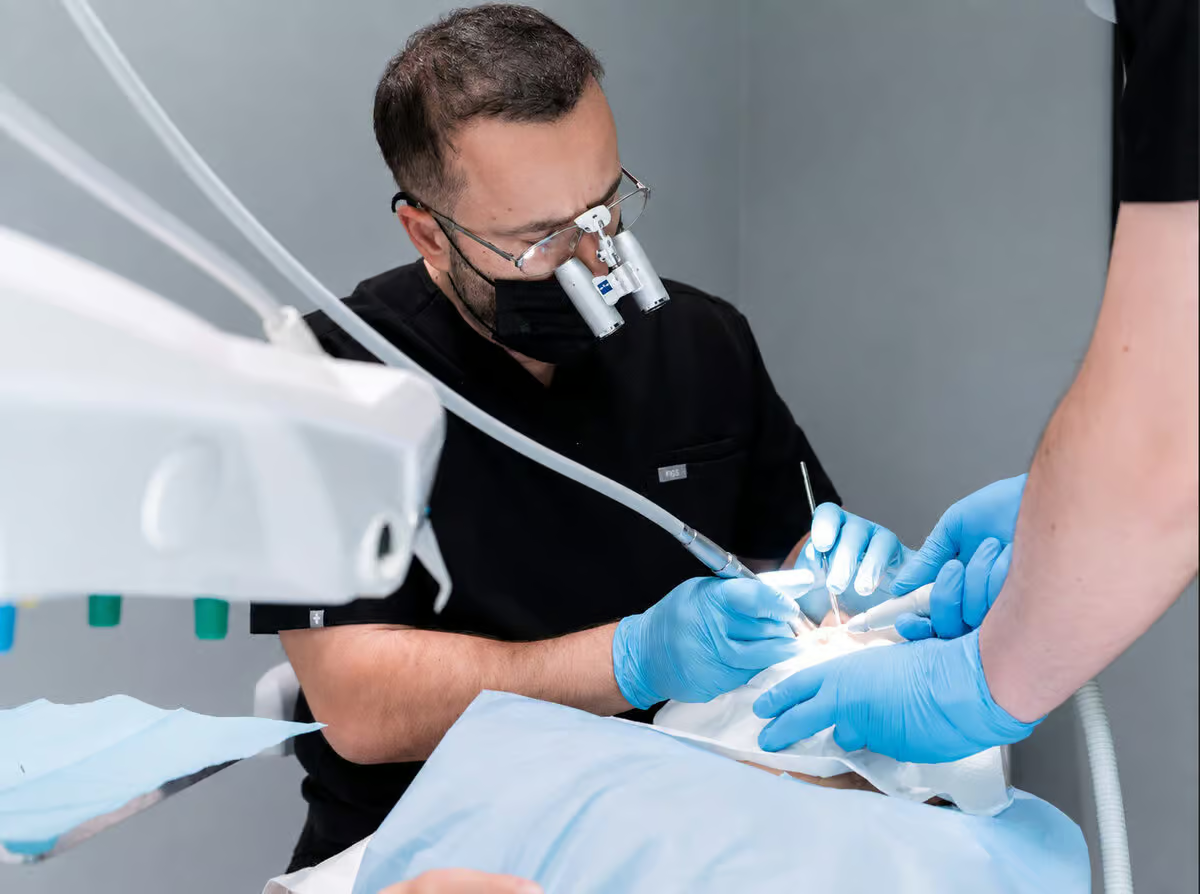
The old veneers are removed by the dentist using professional dental equipment. The removal process must be controlled because the natural tooth structure below should be preserved as much as possible.
The difficulty depends on the material, thickness, and bonding of the existing veneers. Composite veneers and ceramic veneers may require different removal techniques.
Old veneers are not normally removed and reused. New restorations must be designed for the current condition of the teeth.
Step 5: Examination of the Teeth Below
This is one of the most important stages. The dentist can now see the real condition of each prepared tooth.
The examination may reveal:
- Healthy enamel and dentin
- Old bonding material
- Decay near a veneer margin
- A small tooth fracture
- Very thin remaining enamel
- Excessive previous tooth preparation
- Changes in tooth colour
- Gum inflammation
- A need for root canal treatment
If the teeth are healthy, the replacement process can continue as planned. If a problem is found, it must be treated before the new veneers are bonded.
What Happens If a Tooth Cannot Support Another Veneer?
Not every tooth below an old veneer can receive another veneer. Some teeth may have lost too much structure during previous treatments.
A tooth with limited remaining enamel may not provide the same bonding surface. A deep fracture or a large existing filling can also change the treatment plan.
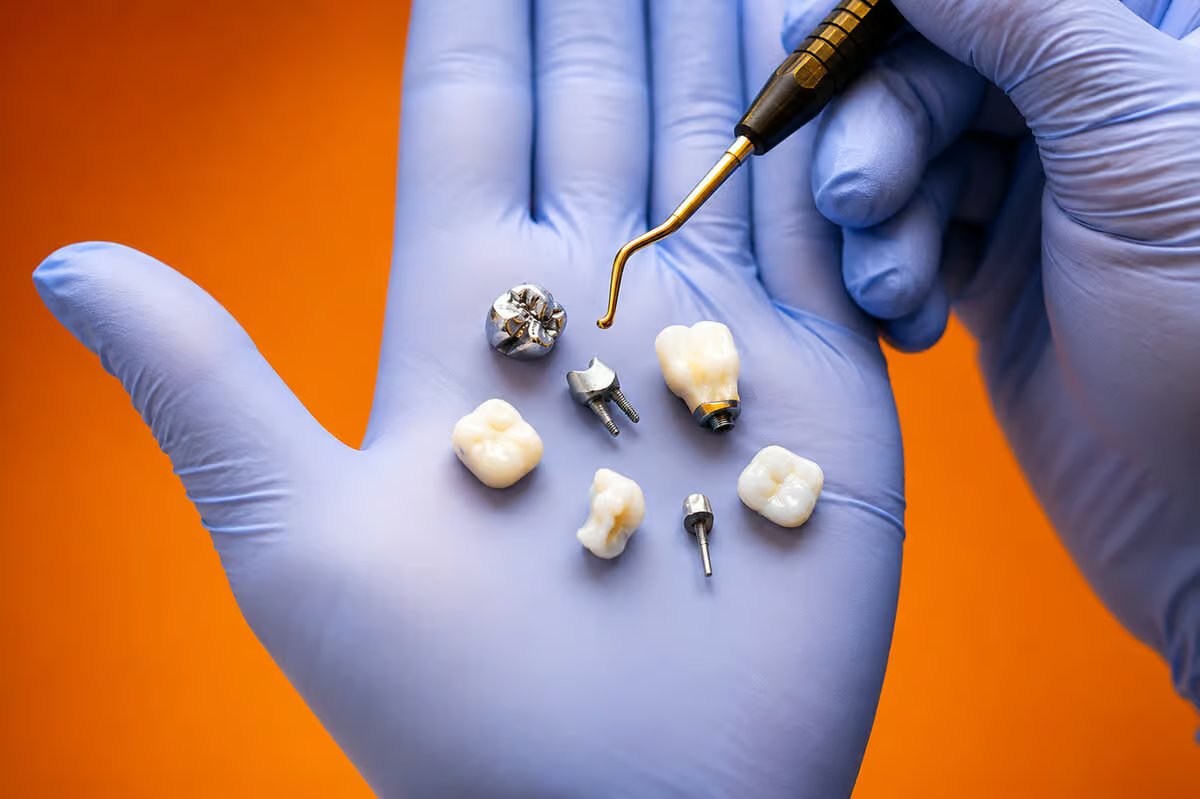
In these situations, the dentist may recommend a crown instead of a veneer. Implantus offers E-Max and zirconia crowns for teeth that require more complete coverage.
This decision is made tooth by tooth. A treatment plan can include veneers on some teeth and crowns on others when clinically necessary.
Step 6: Digital Scans and Shade Selection
After the teeth are ready, the dentist takes digital scans or dental impressions. These records are sent to the dental laboratory.
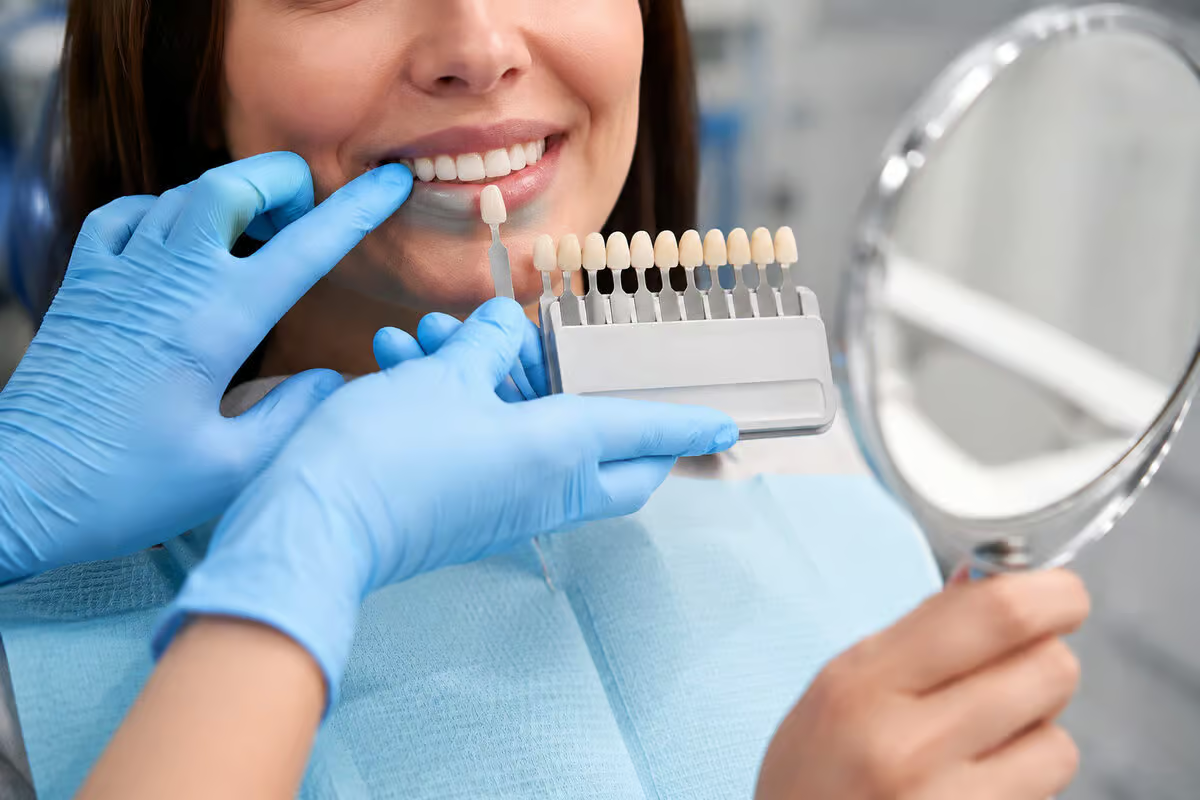
The shade is selected based on the natural teeth, skin tone, facial features, and the patient’s preferences. The colour of the prepared teeth must also be considered because it can affect the final result.
E-Max provides different translucency options. A more translucent veneer may work well when the tooth below has a suitable colour. A darker tooth may require a different level of opacity.
The correct choice is not always the whitest shade. The final smile should have depth, natural colour changes, and surface details.
Step 7: Temporary Veneers
Temporary veneers may be placed while the final E-Max veneers are being produced. They protect the prepared teeth and provide a temporary smile during the laboratory stage.
Temporary veneers can also help the patient evaluate:
- Tooth length
- General shape
- Speech
- Lip support
- Bite comfort
- Overall smile balance
Temporary restorations do not have the same surface quality or strength as final E-Max veneers. They must be treated carefully.
Small changes can be discussed before the final restorations are completed. Major design decisions should not be delayed until the bonding appointment.
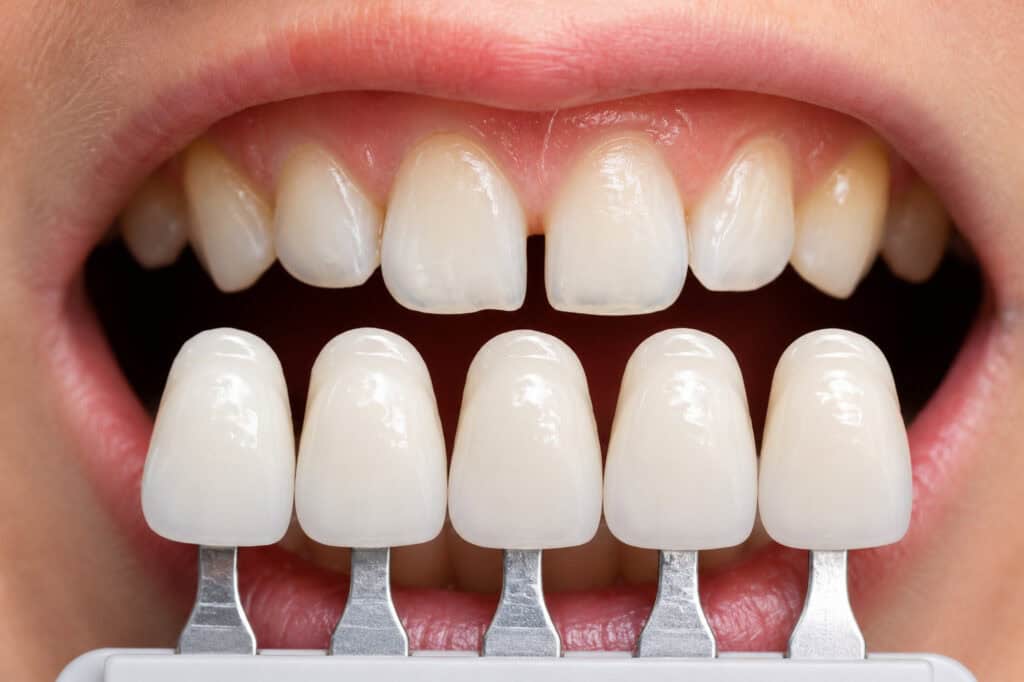
Step 8: Try-In of the New E-Max Veneers
The final veneers are checked before permanent bonding. The dentist evaluates their fit, colour, contact points, margins, and relationship with the gums.
The patient can also see the general appearance of the new smile. Lighting and surrounding tooth colours can affect how the shade appears.
If an important correction is needed, the veneers may be returned to the dental laboratory. It is better to correct the design before final bonding.
Step 9: Final Bonding
Once the fit and appearance are approved, the dentist bonds the E-Max veneers to the prepared teeth. Each veneer must be positioned carefully.
After bonding, the dentist removes extra bonding material and checks the margins. The bite is then tested in different jaw movements.
This stage requires precision. Even a veneer that looks correct can create problems if the bite places too much pressure on its edge.
Step 10: Final Bite and Gum Check
A final appointment is usually arranged before the patient leaves Albania. The dentist checks comfort, bite, gum response, and cleaning access.
Minor adjustments may be completed during this visit. The patient also receives instructions for daily care and future dental checks.
A follow-up appointment may be recommended after the patient returns home. The timing depends on the number of veneers and the complexity of the case.
When Can the Treatment Take Longer?
The treatment may take longer than seven days if problems are found below the old veneers.
Possible reasons include:
- Decay that needs treatment
- Root canal treatment
- Gum inflammation
- A tooth fracture
- Significant loss of enamel
- A need to replace some veneers with crowns
- Complex bite correction
- A large number of veneers
- Additional laboratory changes
- A need for gum treatment before the final design
Some problems can be treated during the same trip. Others may require healing and a second visit.
The clinic should explain this possibility before the patient travels. However, the final decision may only be possible after the old veneers are removed.
Can Old Veneers Be Replaced in One Day?
Replacing several old veneers in one day is not usually the best approach. The teeth must be examined after removal, and the new design requires accurate scans and laboratory work.
Temporary veneers allow enough time for the final restorations to be produced and checked. They also give the patient time to evaluate shape, speech, and comfort.
Fast treatment should not remove important clinical stages. The result depends on what is found below the old veneers and how carefully the new restorations are planned.
How Many Trips Are Normally Needed?
Patients with healthy teeth and gums can often complete veneer replacement in one trip. A stay of five to seven days allows time for examination, removal, temporary veneers, laboratory production, bonding, and final checks.
A second trip may be needed when the teeth or gums require treatment before new veneers can be placed. The healing time depends on the type of treatment.
International patients should review the full dental tourism process in Albania before booking travel. Flights should only be booked after receiving an estimated clinical schedule.
How Should Patients Prepare for the Trip?
Patients should send recent dental records before travelling. Clear photos of the current veneers are also useful.
If available, bring:
- Previous dental X-rays
- Information about the old veneer material
- Records of root canal treatment
- Details about any crowns or implants
- A list of medications
- Photos showing the smile before the old veneers
- A night guard if one is already being used
Patients should also explain what they dislike about the current veneers. Clear information helps the team understand whether the main concern is colour, shape, size, gum position, or function.
How Long Do Replacement E-Max Veneers Last?
E-Max veneers can provide long-term results when they are correctly planned, bonded, and maintained. However, no veneer should be presented as permanent for life.
Their condition depends on oral hygiene, bite pressure, tooth grinding, gum health, and regular dental checks. Biting hard objects can also damage ceramic restorations.
Patients who grind their teeth may need additional protection. The dentist will decide whether a night guard is suitable after evaluating the bite.
Frequently Asked Questions
Must All Old Veneers Be Replaced At The Same Time?
Not always. The dentist may replace only the damaged veneers when colour and design can be matched. Several front veneers may need replacement together when a balanced result cannot be achieved with one veneer.
Can E-Max Veneers Be Placed Over Old Veneers?
No. The old veneers must be removed so the dentist can inspect the teeth and create a reliable bonding surface.
Will The Teeth Be Prepared Again?
Not necessarily. Small refinements may be needed, but healthy tooth structure should be preserved whenever possible.
Are Temporary Veneers Always Required?
Not always, but they are common when several veneers are replaced. They protect the prepared teeth while the final E-Max restorations are produced.
Can Every Old Veneer Be Replaced With E-Max?
No. E-Max may not be suitable for every tooth. The remaining enamel, tooth colour, bite, and previous preparation must be evaluated first.
Final Thoughts
Replacing old veneers with E-Max veneers in Albania often takes one trip of about five to seven days. The procedure includes old veneer removal, examination of the teeth, digital planning, temporary restorations, try-in, bonding, and final checks.
The most important stage is the examination after removal. Healthy teeth may continue with E-Max veneers, while damaged or heavily prepared teeth may require another type of restoration.
Ready to Replace Your Old Veneers? Start With a Careful Evaluation 🦷✨
Old veneers should not be replaced with another standard smile design. The new treatment should correct the reason the previous veneers no longer work for you.
Contact Implantus by Dr. Roland Zhuka to begin your evaluation:
- 📸 Send clear photos of your current veneers
- 🩻 Upload your panoramic X-ray
- 🎨 Explain what you want to change about the colour and shape
- 🦷 Learn whether E-Max veneers are suitable for your teeth
- 🗓️ Receive an estimated treatment timeline before travelling
- ✈️ Plan your dental trip to Tirana with clearer information
WhatsApp: +355 69 70 44 409
Email: info@dr-rolandzhuka.com
Location: Rruga Faik Konica, Tirana, Albania


 English
  Italiano
  Shqip
Shqip  Français