
All-on-8 dental implants in Albania are not automatically the strongest or safest option simply because they use eight implants. At Implantus Dental Clinic in Tirana, Dr. Roland Zhuka considers eight only when the bone anatomy, implant distribution, bridge design, bite and maintenance needs justify those positions. This guide focuses on when eight implants may offer a practical advantage, when four or six may be sufficient, and what patients should ask before choosing a full-arch plan.
What Does All-On-8 Actually Mean?
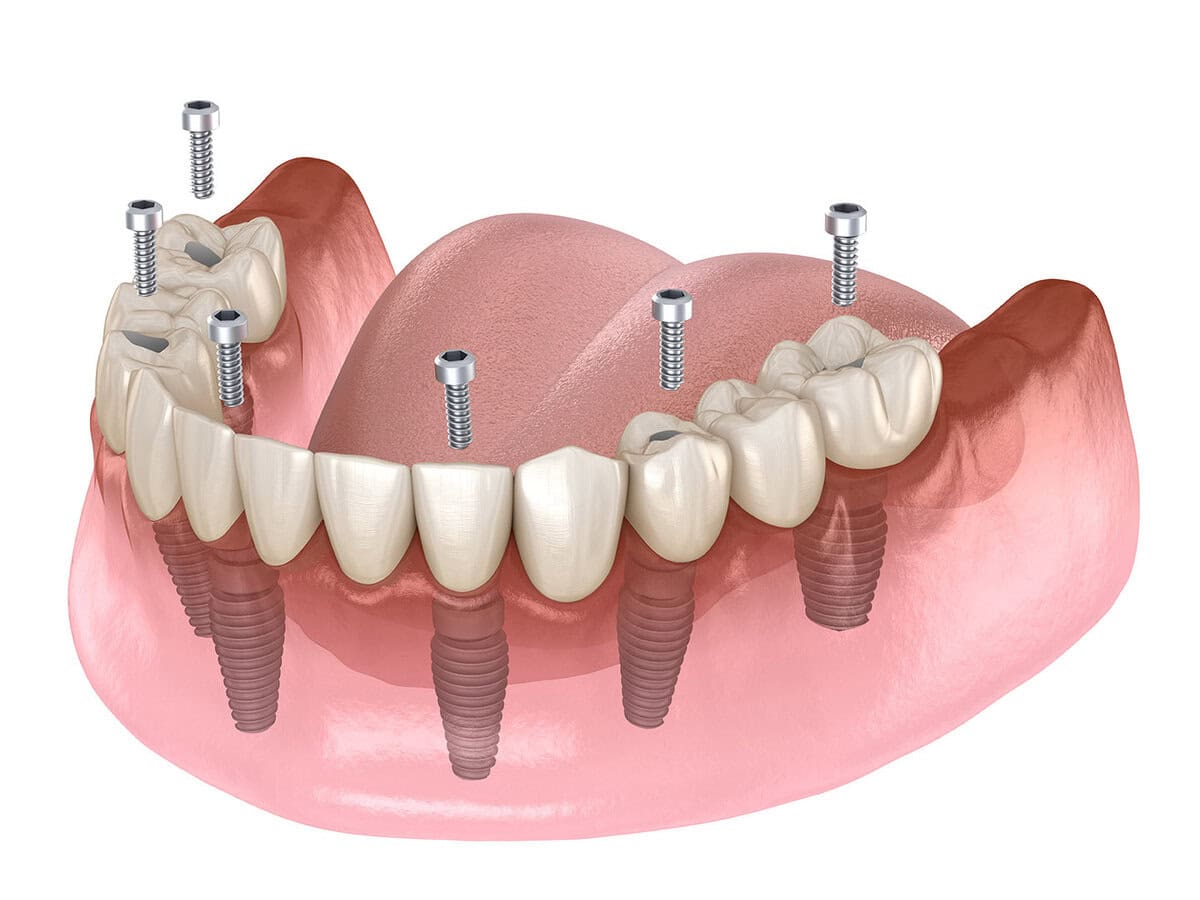
All-on-8 is a full-arch treatment in which eight dental implants support a fixed bridge in either jaw. The bridge replaces an entire row of teeth, while the implants serve as anchors in the jawbone.
This is different from placing one implant for each missing tooth. The number describes the implants supporting the restoration, not the number of visible replacement teeth.
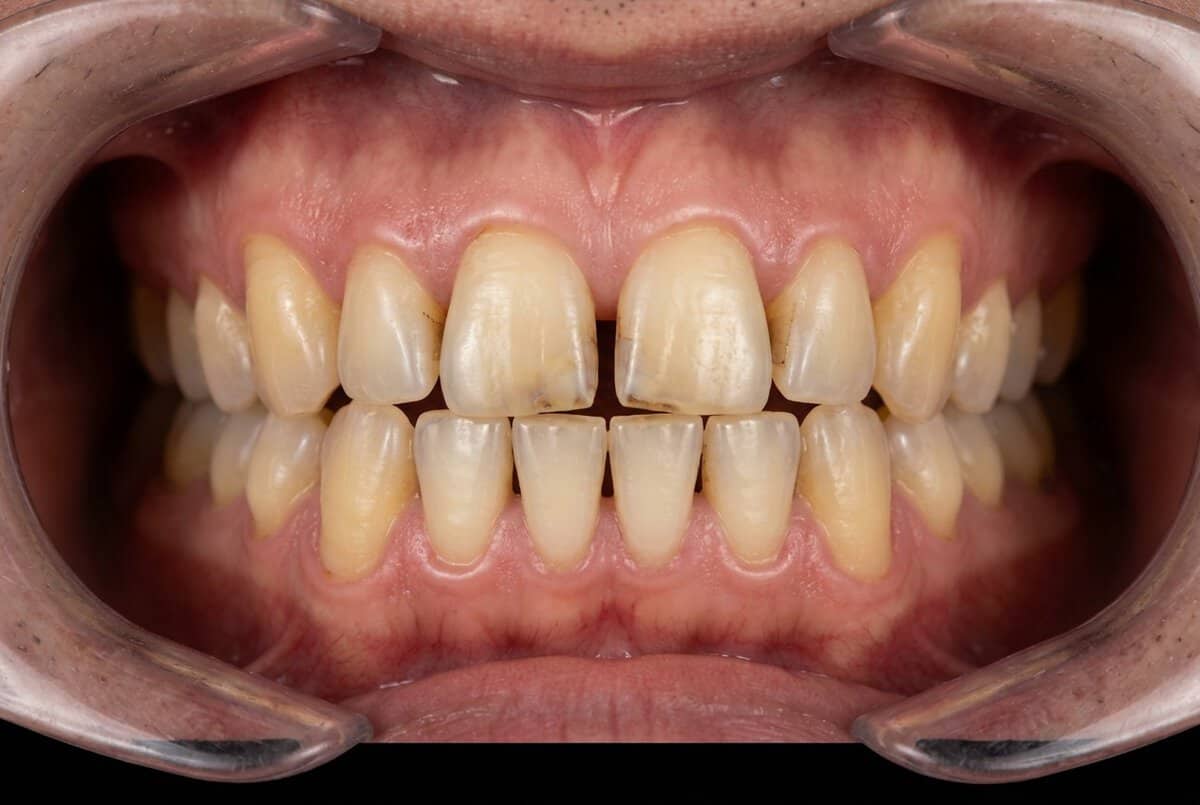
Patients may consider this approach when their remaining teeth cannot be retained or when they already wear complete dentures. However, eight implants are one possible design rather than an automatic requirement for full-mouth rehabilitation.
Our clinic offers All-on-8 implant treatment alongside other full-arch options. The first decision is whether a fixed implant bridge is suitable; the second is how many implants should support it.
When All-on-8 Dental Implants in Albania Offer a Practical Advantage
An All-on-8 plan may be considered when the available bone, intended bridge design, and anticipated chewing forces support a well-distributed eight-implant arrangement. The aim is an appropriate foundation for a specific patient, not a guarantee of stronger or longer-lasting teeth.
When there is enough usable bone across the arch
Eight implants need eight suitable positions with adequate bone and safe distances from nearby anatomical structures. A patient with favorable bone volume across the front and back of the jaw may have more placement options than someone with advanced bone resorption.
The upper jaw requires particular attention to the maxillary sinuses, while the lower jaw requires careful assessment of the nerve pathways. A 3D scan helps us identify possible positions before recommending the number of implants.

Importantly, placing additional implants does not solve inadequate bone automatically. If suitable sites are unavailable, a different arrangement or additional treatment may be more appropriate.
When the planned bridge benefits from wider support
The final bridge should guide the surgical plan, including where replacement teeth end and how they meet the opposing jaw. In selected cases, placing implants farther along a sufficiently developed arch can reduce the need for long unsupported extensions.
This matters because the position and spacing of implants influence how forces pass through the restoration. Eight poorly distributed implants are not necessarily preferable to fewer implants placed in strategically useful positions.
The prosthetic design may also influence whether one continuous bridge or separate sections are considered. These decisions depend on hygiene access, repair options, available space, and the clinician’s assessment.
When the bite creates additional planning demands
Some patients have powerful chewing muscles, an opposing arch with natural teeth, or a history of grinding and clenching. These characteristics deserve attention because they may increase stress on the bridge, its components, and the supporting implants.
Eight implants may be discussed as part of a broader mechanical plan, provided their positions are anatomically suitable. Nevertheless, adding implants alone does not eliminate problems caused by bruxism or an unbalanced bite.
The restoration’s material, shape, contact pattern, and maintenance plan remain important. Patients who grind their teeth may also need protective measures after treatment.
When a complex restoration requires a tailored design
Previous bridges, uneven bone levels, lost teeth, and extensive dental work can make full-arch reconstruction more demanding. In these cases, the clinician must consider the relationship between the jaws, available restorative space, and the desired final tooth positions.
Eight implants can be one possibility when the anatomy permits their distribution and the bridge design justifies them. Other patients may achieve a suitable result using four or six implants, sometimes combined with different restorative strategies.
A detailed prosthetic plan prevents implant number from becoming the starting point. The real question is which arrangement can support an accessible, maintainable restoration for that patient’s mouth.
When Might All-On-8 Be Unnecessary Or Unsuitable?
Many patients do not need eight implants to support a fixed arch. The available evidence does not establish a universal survival advantage from increasing implant numbers alone; the distribution, prosthetic design, bone conditions and maintenance plan matter. The choice must be individualized.
Eight placements may be impractical if the jaw has extensive bone loss, important anatomical restrictions, or insufficient space between potential sites. Active gum disease, uncontrolled health conditions, certain medications, and smoking may also affect implant treatment planning and risk.
These findings do not always rule out implant rehabilitation altogether. They may mean treating an underlying problem first, changing the number or position of implants, or considering specialized techniques.
For example, our article on bone loss during implant planning explains why reduced bone does not necessarily end the conversation about fixed teeth. Dr. Zhuka also evaluates advanced implant approaches for selected patients with difficult anatomy.
How Eight Implants Compare With Four or Six
The names describe implant counts, but they do not identify a universal ranking from basic to best. Each configuration can be appropriate when it matches the patient’s anatomy, prosthetic requirements, and clinical circumstances.
| Approach | Implants per arch | Main planning consideration |
|---|---|---|
| All-on-4 | Four | Strategic distribution, often including tilted posterior implants, can support a fixed arch in selected cases. |
| All-on-6 | Six | Additional potential support positions may suit particular anatomical and restorative plans. |
| All-on-8 | Eight | Requires sufficient suitable sites and a bridge design that benefits from the distribution. |
Fewer implants do not automatically mean weaker treatment, just as more implants do not guarantee greater safety. If you want a broader overview, read our comparison of All-on-4, All-on-6, and All-on-8.
How Dr. Roland Zhuka Evaluates Your Options
At Implantus Dental Clinic, Dr. Roland Zhuka plans complex implant rehabilitation using clinical examination and three-dimensional imaging. Our approach looks at the final teeth, gum health, jaw anatomy, and bite before choosing implant positions.
A complete oral examination
The assessment begins with remaining teeth, existing restorations, gum condition, and the way the upper and lower jaws meet. Keeping treatable teeth may be preferable to removing them solely to create an implant-supported arch.
Your medical history also matters, including medications, previous surgery, healing problems, and habits such as smoking. We discuss these details because they can affect surgical timing and the treatment options available.
CBCT scans and restorative planning
Cone-beam computed tomography, or CBCT, provides three-dimensional information about available bone and nearby structures. For a general overview of how implants work, see the Cleveland Clinic guide to dental implants. It helps the clinician evaluate whether eight planned implant sites are realistic and whether another configuration would be more sensible.
The position of the intended teeth must be considered alongside the imaging findings. Our detailed article on why implant success depends on planning explains this relationship between surgery and restoration.
Explaining the recommendation
You should understand why a clinician recommends eight implants instead of four or six. Ask how the proposed distribution serves the bridge, whether additional procedures are needed, and what alternatives were considered.
A useful plan also explains temporary teeth, healing, the final restoration, and long-term maintenance. It should be tailored to your examination rather than determined by the name of a package.
What if the treatment plan changes?
Findings during surgery may require the implant arrangement to change. Fewer implants, staged surgery, or additional treatment should be discussed before the appointment.
Placing an eighth implant in an unsuitable position is not a reasonable goal. A revised plan may be safer and more maintainable than forcing the original number despite anatomical restrictions.
For international patients, this possibility affects travel planning and temporary teeth. Ask how unexpected findings would be explained, whether another visit might be needed, and how the clinic would organize follow-up if the schedule changes.
What Happens During All-On-8 Treatment?
The exact sequence depends on whether extractions, bone treatment, or other preparations are required. Most full-arch journeys include assessment, implant placement, a healing period, and fabrication of the final bridge.
Consultation and preparation
We review your concerns, medical history, oral examination, and imaging before discussing the available options. If eight implants are recommended, their intended positions and the design of the replacement teeth form part of the plan.
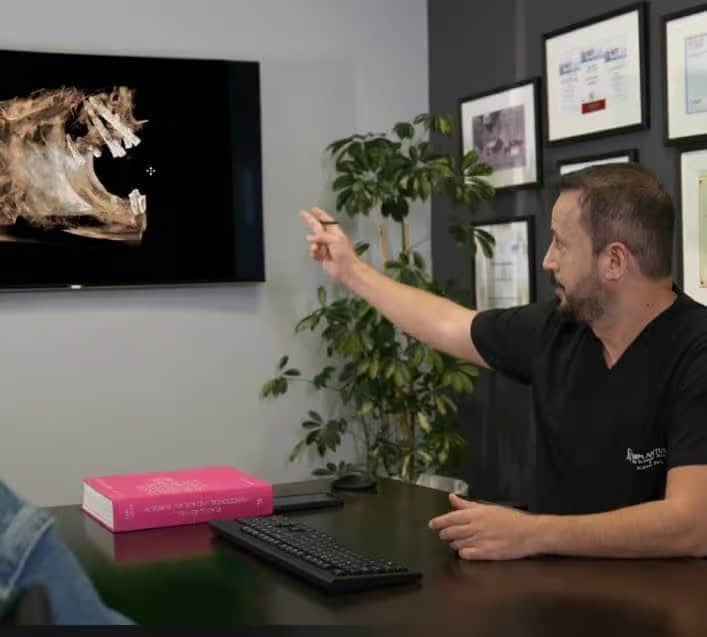
Some patients first need treatment for infection or gum disease. Others may require extractions or bone-related procedures before a suitable foundation is available.
Implant placement and provisional teeth
During surgery, the implants are placed in planned positions within the jawbone. Whether temporary fixed teeth can be attached soon afterward depends on factors such as implant stability, bone conditions, and the forces expected during healing.
An immediate provisional bridge is not the same as the final restoration. Even when patients leave with fixed temporary teeth, the implants still need time to integrate with the surrounding bone.
Healing and the definitive bridge
Follow-up appointments allow us to check healing, the tissues, and how the temporary restoration functions. The timing of the definitive bridge varies according to the clinical situation and cannot be promised before assessment.
Once the implants and tissues are ready, the final bridge can be designed for appearance, speech, bite function, and cleaning access. Patients receive instructions for protecting and maintaining the completed restoration.
Planning Treatment In Albania From Abroad
If you live outside Albania, an initial exchange of recent dental records and imaging may help the clinic understand your situation. Remote discussion can clarify possible treatment directions, but it does not replace the examination required for a definitive recommendation.
Ask which records to send, how many visits may be needed, and whether a temporary bridge is possible in your circumstances. Travel arrangements should leave room for assessment and follow-up rather than assuming every All-on-8 case follows the same timetable.
Our dental tourism information explains the clinic’s wider approach to international patients. We can discuss a realistic sequence of appointments after reviewing your individual case.
Long-Term Care Matters As Much As Implant Number
An eight-implant bridge still needs careful cleaning around the restoration and supporting tissues. Plaque accumulation, inflammation, mechanical wear, and missed checkups can create problems regardless of how many implants were placed.
Daily care may involve specific brushes or other cleaning aids recommended for your bridge design. Professional examinations allow the dental team to monitor the gums, implant surroundings, bite, and prosthetic components.
Patients should report bleeding, persistent discomfort, looseness, or changes in the way their teeth meet. Early evaluation is preferable to waiting for a small concern to affect the whole restoration.
Frequently Asked Questions
Are eight dental implants better than six?
Not automatically, because successful full-arch treatment depends on position, bone, bite, and bridge design. Eight may suit selected patients, while six can be sufficient for others.
Can All-on-8 be used in the upper and lower jaw?
Yes, a fixed bridge supported by eight implants can be planned for either arch when conditions permit. Each jaw requires its own assessment, and eight implants per arch should not be confused with eight for the entire mouth.
Can I get All-on-8 if I have bone loss?
Possibly, but severe bone loss can restrict safe implant positions and make eight conventional implants unsuitable. Imaging will help determine whether a different number, bone treatment, or another technique deserves consideration.
Will I receive permanent teeth immediately?
Immediate temporary teeth may be possible if the implants achieve suitable stability and the bite can be controlled. The definitive bridge is normally planned after the necessary healing and follow-up assessments.
How do I know which implant number I need?
The decision follows an oral examination, appropriate imaging, and a plan for the final bridge. Your clinician should explain why the recommended number suits your anatomy and the alternatives available.
🦷 Find Out Whether All-On-8 Is Right For Your Smile
If you are considering fixed teeth, Dr. Roland Zhuka can assess whether eight implants offer a meaningful advantage for your individual restoration. Contact Implantus Dental Clinic in Tirana to discuss your existing dental records, treatment possibilities, and the next step toward a consultation.
- 📧 Email: info@dr-rolandzhuka.com
- 📞 Phone: +355 69 70 44 409
- 📍 Location: Rruga Faik Konica, Tirana 1001, Albania
- 🌐 Contact: Speak with our team