

Retainers after braces or Invisalign are not optional. I say this very clearly to every patient because I have seen what happens when teeth are beautifully aligned, the treatment ends, and then the retainer stays in a drawer.
Teeth move. They move slowly, quietly, and sometimes in ways you only notice months later. The retainer is what protects the time, money, and patience you invested in your smile.
At Implantus Dental Clinic in Tirana, we treat many adults who wore braces years ago and now need correction again because they stopped wearing retainers too early. My goal is to help you avoid that second treatment.
Why Retainers After Braces or Invisalign Matter
After orthodontic treatment, your teeth may look finished, but the bone and ligaments around them still need time to reorganize. The teeth have been moved through bone. That bone does not become fully stable the day your braces come off or your last Invisalign tray ends.
This is the part patients do not always see. The smile looks straight, the bite feels better, and everyone thinks the work is done. Biologically, the mouth is still adapting.
Retainers after braces or Invisalign hold the teeth in their new position while the surrounding tissues settle. Without that support, the teeth often drift toward their old position. This is called orthodontic relapse.
Some relapse is small. A lower front tooth starts to rotate. A tiny gap opens. The bite feels different on one side. Other relapse is more serious, especially in patients who had crowding, spacing, deep bite, open bite, or teeth removed before treatment.
How Long Do You Need to Wear Retainers?
Most patients want a simple answer. Here it is: you need retainers for life, but not all day for life.
Usually, the first months after treatment are the most demanding. Many patients wear removable retainers full-time for a short period, then move to night-time wear. The exact schedule depends on your original problem, your age, your bite, and how stable the result looks clinically.
In our practice, I prefer to explain it this way: orthodontic treatment moves the teeth, and retention protects the result. If you stop protecting the result, the body can slowly undo part of the work.
Are you wondering if your teeth can really move after years of being straight? Yes. I have treated patients in their 40s and 50s who had perfect teeth after braces as teenagers, then developed crowding again because they stopped wearing their retainers.
The first 3 to 6 months
This is the high-risk phase. The teeth are straight, but the tissues are still adapting. Your dentist or orthodontist may ask you to wear your retainer every night, or in some cases both day and night except during meals.
If you feel tightness when inserting the retainer, that tells us the teeth are already trying to move. A little tightness can be normal if you missed a night. Pain or a retainer that no longer fits is a different problem.
After the first year
Many patients move to night-time wear. For some, that means every night. For others, after long-term stability, it may be several nights per week.
I am careful with this advice because every mouth is different. A patient who had severe crowding before Invisalign treatment may need stricter retention than someone who corrected a small spacing issue.
Long-term retention
Your teeth are part of a living system. Lips, tongue pressure, chewing forces, gum health, missing teeth, grinding, and aging all influence tooth position.
This is why I do not like telling patients, “Wear it for two years and then stop.” That sounds nice, but it is not how mouths behave. Long-term night wear is usually the safest plan.
Types of Retainers After Braces or Invisalign
Not every retainer is the same. The best choice depends on your treatment, your habits, your bite, and whether you are likely to forget removable appliances.
At Implantus Dental Clinic, we look at retention as part of the full smile plan, not as an afterthought. If we are also planning aesthetic work such as Digital Smile Design, veneers, whitening, or bite correction, the retainer design must fit that plan.
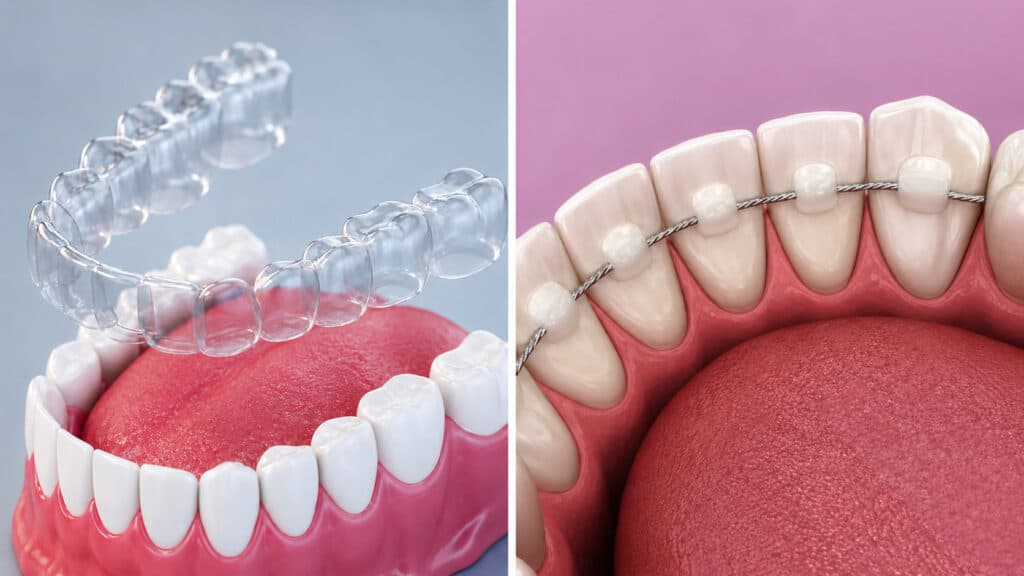
Clear removable retainers
Clear retainers look similar to Invisalign trays. They fit closely over the teeth and are usually comfortable, thin, and discreet. Many adults prefer them because they are almost invisible.
They are effective when worn correctly. The problem is that they can be lost, damaged, or forgotten. They also need replacement over time because plastic wears, cracks, or loses accuracy.
Clear retainers should not be exposed to hot water, direct heat, or aggressive cleaning products. Heat can distort the plastic, and even a small distortion can affect the fit.
Hawley retainers
A Hawley retainer has an acrylic base and a metal wire across the front teeth. It is stronger than many clear retainers and can sometimes be adjusted slightly.
Some patients do not like the visible wire. Others like the durability. It is often a good choice for certain orthodontic cases, especially when small adjustments may be needed after treatment.
Fixed bonded retainers
A fixed retainer is a thin wire bonded behind the front teeth, usually on the lower teeth and sometimes on the upper teeth. You do not remove it. That is the main advantage.
For patients who know they will forget a removable retainer, a bonded retainer can be very useful. It is not perfect. It can loosen, plaque can collect around it, and you must clean carefully.
I often recommend a fixed retainer for lower front teeth because this area is famous for relapse. Lower incisors love to crowd again. Anyone who has had braces knows exactly what I mean.
Can Invisalign Retainers Be the Same as Your Last Tray?
No, not ideally. Your last Invisalign tray was made to move teeth or finish tooth positioning. A retainer is made to hold teeth.
Some patients use the last aligner temporarily while waiting for the retainer, but it should not be treated as the final long-term solution. Retainers are usually made from stronger material and designed for stability rather than active movement.
If your last tray becomes loose, cracked, cloudy, or distorted, it will not hold your teeth properly. That is when small movement starts.
What Happens If You Stop Wearing Your Retainer?
The first sign is usually tightness. You insert the retainer after a few missed nights and it feels uncomfortable. That means the teeth have shifted slightly.
If the retainer still fits fully, you may be able to return to night wear and regain stability. If it does not seat all the way, do not force it aggressively. You can damage teeth, gums, or the retainer itself.
After longer periods without wear, the teeth may move enough that a new retainer will simply hold the new, shifted position. If you want the teeth straight again, you may need short orthodontic refinement with clear aligners.
This is common. It is also avoidable.
How to Clean Retainers Properly
A retainer sits against your teeth for hours. If it is dirty, you are holding bacteria, plaque, and odor against enamel and gums. Clean retention is part of dental health, not just appearance.
Rinse the retainer with cool water every time you remove it. Brush it gently with a soft toothbrush. Use mild soap if advised, not abrasive toothpaste, because some toothpastes scratch plastic retainers and make them collect stains faster.
Never boil a retainer. Never leave it in a hot car. Never wrap it in a napkin at a restaurant. I have heard that story too many times, and it usually ends with the retainer in the trash by accident.
If you have a fixed retainer, cleaning is different. You need careful brushing and flossing around the bonded wire. Interdental brushes or special floss threaders can help. During check-ups, we also examine the bonding points to make sure the wire has not detached.
Retainers and Cosmetic Dentistry
Many adults finish orthodontic treatment and then want to improve tooth shape, color, or symmetry. This is normal. Straight teeth are only one part of a beautiful smile.
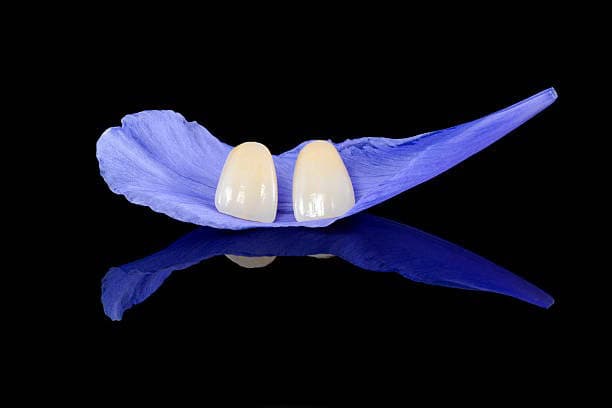
If you plan professional teeth whitening, we usually prefer to do it before final shade selection for restorations. If you plan porcelain veneers, the retainer may need to be remade after the veneers are placed because the tooth shape changes.
This is where planning matters. A retainer made before cosmetic work may not fit after cosmetic work. If patients are traveling to Albania for dental treatment, we organize the sequence carefully so the final retainer matches the final smile.
Do Retainers Affect Your Bite?
A well-made retainer should not disturb your bite. You may feel pressure at first, especially if the teeth have been without retention for a short time, but it should not create a new bite problem.
If your retainer feels high, uneven, painful, or prevents your teeth from closing normally, it needs to be checked. Do not keep wearing something that changes your bite in a bad way.
Patients who grind their teeth need special attention. Grinding can crack clear retainers or wear them faster. In some cases, we need a retainer that also protects against night grinding, or a separate night guard depending on the case.
How Often Should Retainers Be Replaced?
Clear retainers often need replacement every 1 to 3 years, sometimes sooner if you grind your teeth or wear them heavily. Hawley retainers may last longer with good care. Fixed retainers can last for years, but the bonding must be checked.
You should replace a retainer if it is cracked, loose, distorted, smells bad after cleaning, or no longer fits fully. A retainer that does not fit is not doing its job.
Bring your retainer to dental check-ups. I can learn a lot by looking at how it fits, where it is worn, and whether the teeth are stable.
Common Mistakes Patients Make With Retainers After Braces or Invisalign
The biggest mistake is stopping too early. The second is wearing the retainer only when the teeth start to feel different. By that point, movement has already started.
Another mistake is thinking a fixed retainer means you never need anything else. A bonded lower retainer protects the front teeth, but it does not always protect the full arch. Some patients need both fixed and removable retention.
Patients also wait too long when a retainer breaks. If your retainer cracks today and you wait three months, the new retainer may not fit the old tooth position anymore.
Fast action saves results. That is true in implants, orthodontics, and almost every part of dentistry.
Retainers for Adults: Is It Different?
Adult teeth can be moved very successfully, but adult mouths often have more factors to manage. Gum recession, old fillings, crowns, missing teeth, implants, bone levels, and grinding can all influence retention.
In adults, I look not only at tooth alignment but also at the whole bite. If one tooth carries too much force, it may push the alignment out of balance. If a missing tooth has not been replaced, neighboring teeth may lean or drift.
For some patients, orthodontics is part of a larger plan that includes restorations, bite correction, or dental implants. The retainer must respect that full plan, or the result will not stay stable.
FAQ About Retainers After Braces or Invisalign
Do I really have to wear retainers forever?
In most cases, yes, but usually only at night after the first stabilization period. Teeth can move at any age, even many years after treatment. Long-term retainer wear is the simplest way to protect your result.
What if my retainer feels tight?
Mild tightness usually means the teeth have shifted slightly or you missed some wear time. If the retainer still fits completely, wear it as instructed and monitor the feeling. If it does not seat fully or causes pain, schedule a dental visit instead of forcing it.
Can I eat with my retainer in?
Most removable retainers should be taken out before eating. Food can damage the retainer, stain it, or trap bacteria against your teeth. Always store it in its case, not in a tissue or pocket.
How do I know if my fixed retainer is broken?
You may feel a loose wire with your tongue, notice movement in one tooth, or see that part of the bonding has detached. Sometimes patients do not feel anything, which is why check-ups matter. If a fixed retainer breaks, teeth can shift quickly.
Can I use my old retainer if my teeth moved?
If it fits fully without force, it may still help. If it only fits halfway or feels painful, do not push it into place. You may need a new scan, a new retainer, or a short aligner correction.
Are retainers after Invisalign different from retainers after braces?
The purpose is the same: hold the teeth stable. The design may differ depending on your bite, tooth movement, and aesthetic needs. Many Invisalign patients use clear retainers, but fixed retainers or Hawley retainers can also be appropriate.
Your Retainer Is Part of the Treatment, Not an Extra
I tell patients that the day braces come off or Invisalign ends is not the finish line. It is the day we start protecting the result.
A beautiful smile should not depend on luck. With the right retainer, the right wear schedule, and regular checks, your teeth can stay stable for many years.
If you have finished orthodontic treatment, lost your retainer, or feel your teeth moving again, contact Implantus Dental Clinic in Tirana. Send us photos on WhatsApp or through our website form, and we will give you a free quote and clear advice on the next step.




 English
  Italiano
  Shqip
Shqip  Français