

For many patients seeking dental implants, insufficient bone structure represents a seemingly insurmountable obstacle. Traditional implant placement requires adequate bone volume to support titanium posts, and when that bone is missing, patients have historically faced lengthy bone grafting procedures or been told implants weren’t possible.
Dr. Roland Zhuka at Implantus in Albania specializes in advanced solutions that overcome these challenges, including innovative techniques often referred to as “no-bone” dental implants.
Understanding Bone Loss and Its Impact on Implants
Bone loss in the jaw is a natural consequence of tooth loss. When teeth are extracted or lost, the bone that once supported them begins to resorb—essentially shrinking away due to lack of stimulation. This process can be quite dramatic, especially in patients who have been missing teeth for many years.
Common causes of jawbone deterioration:
- Tooth extraction – Immediate beginning of bone resorption process
- Long-term tooth loss – Progressive deterioration over months and years
- Periodontal disease – Bacterial infection destroying bone and supporting tissue
- Denture wear – Pressure accelerates bone loss over time
- Trauma or injury – Damage to jaw requiring bone removal
- Previous failed implants – Bone loss around implants that didn’t integrate
- Natural aging – Gradual bone density reduction with age
The amount of bone loss varies significantly between individuals. Some patients lose bone rapidly, while others maintain relatively good bone structure even years after tooth loss.
How bone loss affects traditional implants:
- Insufficient height – Not enough vertical bone dimension for standard implants
- Inadequate width – Narrow ridges that cannot accommodate implant diameter
- Poor density – Soft bone quality unable to provide stable support
- Anatomical limitations – Proximity to nerves, sinuses, or other critical structures
- Instability concerns – Risk of implant failure in compromised bone
These challenges have traditionally required bone grafting procedures to build up sufficient structure before implant placement—a process that can add months to treatment timelines and significant complexity.
What Are “No-Bone” Dental Implants?
The term “no-bone dental implants” doesn’t mean implants that don’t use any bone at all. Rather, it refers to advanced techniques that allow implant placement in cases where traditional approaches would be impossible without extensive bone grafting.
Techniques that enable implant placement with minimal bone:
- Zygomatic implants – Extra-long implants anchored in cheekbone rather than jaw
- Pterygoid implants – Implants engaging the pterygoid bone behind upper jaw
- All-on-4/All-on-6/All-on-8 concepts – Strategic placement maximizing existing bone
Dr. Zhuka has extensive experience with these advanced techniques, having successfully treated hundreds of patients who had been told by other dentists that implants weren’t possible without major bone grafting.
Zygomatic Implants: The Game-Changer for Upper Jaw
Zygomatic implants represent one of the most significant advances in implant dentistry for patients with severe upper jaw bone loss. These specialized implants bypass the atrophied jawbone entirely by anchoring into the zygomatic bone—the strong cheekbone that forms the upper lateral portion of the face.
Key features of zygomatic implants:
- Extended length – Typically 40-55mm long (compared to standard 10-15mm implants)
- Cheekbone anchorage – Engagement with dense, stable bone that doesn’t resorb
- Immediate loading capability – Often can support teeth on the same day as surgery
- No grafting required – Eliminate months of healing associated with sinus lifts
- Predictable outcomes – High success rates even in severely atrophied jaws
- Complex technique – Requires specialized training and significant experience
Ideal candidates for zygomatic implants:
- Severe maxillary atrophy – Minimal remaining bone in upper jaw
- Failed bone grafts – Previous grafting procedures that didn’t succeed
- Sinus pneumatization – Enlarged sinuses leaving little bone for implants
- Medical contraindications to grafting – Health conditions making grafting risky
- Time-sensitive needs – Patients requiring faster treatment timeline
- Previous implant failures – Situations where conventional implants didn’t integrate
Pterygoid Implants: Accessing Hidden Bone
Pterygoid implants utilize bone located behind and above the upper molars—an area that remains relatively unaffected by the resorption that occurs in more forward portions of the jaw. This dense bone provides excellent support for implants even when bone elsewhere has deteriorated significantly.
Advantages of pterygoid implant placement:
- Stable bone foundation – The pterygoid region maintains good density
- Avoids sinus complications – Placement posterior to maxillary sinus
- No grafting necessary – Utilizes existing bone structure
- Immediate loading potential – Can often support teeth right away
- Predictable integration – Good success rates in experienced
- Strategic positioning – Provides posterior support for full-arch restorations
Technical considerations:
- Specialized surgical approach – Requires advanced training and anatomical knowledge
- Precise angulation – Specific trajectory needed to engage pterygoid bone
- Limited visibility – Posterior location makes surgical access challenging
- Experience-dependent outcomes – Success closely tied to surgeon expertise
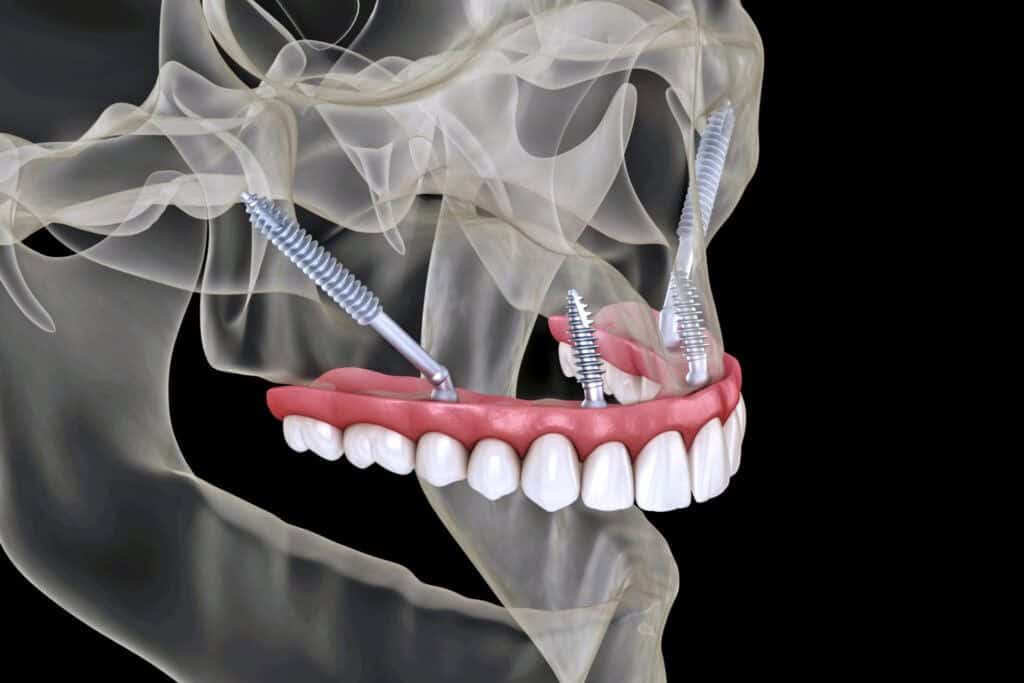
The All-on-4 Concept: Strategic Implant Placement
The All-on-4 treatment concept revolutionized full-arch restoration by demonstrating that strategic placement of just four implants could support a complete arch of teeth—even in patients with significant bone loss. The technique uses tilted posterior implants to maximize the use of available bone.
How All-on-4 works:
- Four implant foundation – Two straight anterior implants and two tilted posterior implants
- Tilted posterior placement – Angled implants avoiding anatomical limitations
- Maximum bone utilization – Engaging longest possible bone span
- Immediate loading – Teeth attached on the same day as implant surgery
- Biomechanical distribution – Forces spread effectively across four support points
All-on-6 and All-on-8 variations:
- Additional implants – More than four when bone permits
- Increased stability – Extra support points for enhanced security
- Flexibility – Adaptation to individual bone patterns
- Prosthetic advantages – More implants allowing better tooth positioning
Candidates for All-on-4 treatment:
- Multiple missing teeth – Need for full-arch restoration
- Moderate to advanced bone loss – Insufficient bone for traditional placement
- Healthy remaining bone – Adequate bone in anterior and posterior positions
- Desire for fixed teeth – Preference for permanent over removable solutions
- Time efficiency priorities – Want teeth in a compressed timeframe
The technique offers an elegant solution for many patients who previously faced complex multi-stage treatments.
Dr. Zhuka’s Approach to Complex Bone Situations
Treating patients with significant bone loss requires far more than technical skill alone. Dr. Zhuka begins every case with a comprehensive evaluation, using detailed 3D imaging to assess bone quantity, quality, and anatomical limitations.
This process includes careful identification of nerves and other critical structures, evaluation of bone density, review of previous treatments or surgeries, and consideration of medical history factors that may influence healing. Equal importance is given to understanding the patient’s goals, including expectations related to timeline, aesthetics, and procedural complexity.
Based on this detailed assessment, treatment planning is carried out with a strategic and flexible mindset. Multiple treatment options are explored and weighed through a risk–benefit analysis, ensuring the chosen approach offers the greatest advantage with the least unnecessary complexity.
Whenever possible, advanced techniques are used to minimize or avoid bone grafting, while implant positioning is optimized to make the best use of available bone and support ideal prosthetic outcomes.
A key element of Dr. Zhuka’s approach is preparation for the unexpected. Prosthetic-driven planning ensures implants are placed with the final restoration in mind, and contingency strategies are established in advance in case surgical findings differ from initial scans.
This level of foresight and adaptability reduces intraoperative surprises, increases predictability, and significantly improves long-term success for complex implant cases.
When Bone Grafting Still Makes Sense
Although modern implant techniques often allow treatment in cases with limited bone, grafting procedures remain the best option in certain situations. Dr. Zhuka bases his recommendations on long-term success and stability, rather than avoiding grafting simply because alternative techniques exist.
Bone grafting may be preferable when optimal aesthetics are required, especially for front teeth where natural gum and bone contours are critical. It is also commonly recommended for single-tooth gaps where advanced implant approaches are not suitable, for younger patients with longer life expectancy, or when bone loss is too severe for alternative methods.
In some cases, vertical bone height is necessary to achieve proper bite relationships, and certain patients may feel more comfortable with a conventional, well-established approach.
Several types of bone augmentation procedures may be used depending on the clinical situation. These include sinus lift surgery to increase bone in the upper jaw, ridge augmentation to widen narrow areas, block grafts to restore significant bone volume, socket preservation after tooth extraction, and guided bone regeneration using membranes to support new bone growth.
When grafting is advised, Dr. Zhuka clearly explains the reasoning behind this choice and how it benefits the final outcome. By comparing grafting with alternative options, patients gain a clear understanding of why it may offer the most predictable, stable, and aesthetically pleasing result in their specific case.
The Treatment Process for No-Bone Implant Cases
Patients with significant bone loss undergoing advanced implant procedures experience a carefully orchestrated treatment journey designed to maximize success while minimizing complications.
Initial consultation phase
The process begins with a comprehensive examination that includes a detailed assessment of the overall oral condition and a CT scan to obtain precise 3D images of the bone and surrounding anatomical structures. These diagnostics allow for accurate evaluation and form the foundation for safe, well-planned treatment.
Based on the findings, different treatment options are discussed clearly, outlining the advantages and limitations of each approach. Patients are encouraged to ask questions and express concerns, leading to a collaborative decision-making process. Financial planning is also explained in detail, ensuring a clear understanding of the treatment investment before moving forward.
Surgical planning phase
Computer-guided planning is performed using CT data to simulate surgery virtually and determine the most accurate implant positions while maintaining safe distances from critical anatomical structures. A digital prosthetic mock-up is then created to design the final tooth restoration, ensuring implant placement supports both function and aesthetics.
Based on this plan, custom surgical guides are fabricated to translate the digital design into precise execution during surgery. Before the procedure, a final pre-operative consultation is conducted to review every detail, and medical optimization is completed to ensure any health conditions are well controlled for a safe and successful outcome.
Surgery day
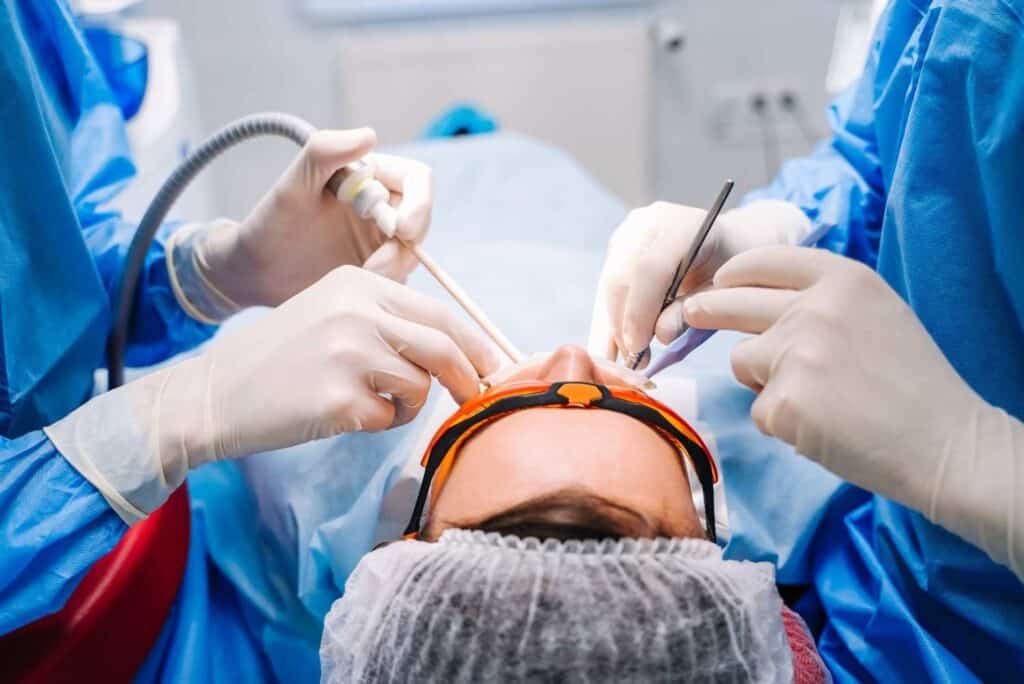
Anesthesia is administered at the start of the procedure to ensure complete comfort throughout surgery, followed by precise surgical access that allows clear visibility for accurate implant placement. The implants are then installed according to the pre-planned positions, with careful verification of their stability to confirm they are securely anchored.
When adequate stability is achieved, temporary teeth are often attached the same day, allowing patients to leave with functional teeth immediately. The procedure concludes with detailed post-operative instructions, providing clear guidance for the healing phase and helping ensure a smooth and predictable recovery.
Recovery and healing
The immediate post-operative period usually involves the first few days after surgery, during which mild swelling and discomfort are expected and gradually subside. This is followed by a healing phase lasting several weeks, allowing the implants to begin integrating with the surrounding bone.
Regular follow-up appointments are scheduled to monitor healing, address any concerns, and make adjustments to the temporary restoration if needed. Over the following months, osseointegration is completed, resulting in full fusion between the implants and bone and preparing the foundation for the final restoration.
Final restoration phase
Precise impressions or digital scans are taken to capture the exact implant positions and serve as the basis for fabricating the permanent prosthetic teeth. These custom restorations are then created with careful attention to fit, function, and aesthetics, followed by try-in appointments to confirm comfort, appearance, and proper alignment.
Once approved, the definitive prosthetic restoration is securely installed and the bite is refined to ensure even, balanced contact between teeth. The process concludes with detailed home-care education, giving patients clear instructions on cleaning, maintenance, and long-term care to protect their new teeth.
Success Rates and Long-Term Outcomes
Patients considering advanced implant techniques often wonder whether these approaches are as reliable as conventional methods. Clinical research and real-world experience show that, when properly planned and executed, advanced implant solutions achieve excellent success rates.
Techniques such as zygomatic, pterygoid, tilted, short implants, and All-on-4 restorations consistently demonstrate outcomes comparable to traditional implant placement, with long-term stability and high patient satisfaction.
Dr. Zhuka’s experience plays a key role in achieving results that meet or even exceed published success rates. Precision during surgery, correct implant positioning, and careful integration of prosthetic design all contribute to predictable and durable outcomes, even in complex cases involving reduced bone availability.
Long-term success depends on several important factors beyond the surgical procedure itself. Patient health, proper prosthetic design, balanced bite forces, and adherence to maintenance recommendations all influence implant longevity. Avoiding smoking, attending regular follow-up visits, and maintaining good oral hygiene help protect the implants and surrounding tissues.
With appropriate planning, skilled execution, and consistent aftercare, advanced implant restorations are not only effective but also highly durable. Many patients can expect their restorations to function comfortably and reliably for decades, making these techniques a dependable long-term option.
Who Is a Good Candidate?
Not every patient with bone loss is automatically a candidate for advanced “no-bone” techniques. Dr. Zhuka carefully evaluates whether these approaches are appropriate for individual situations.
Favorable patient characteristics:
- Adequate general health – Medical conditions that don’t severely compromise healing
- Realistic expectations – Understanding of what treatment can and cannot achieve
- Commitment to care – Willingness to follow instructions and attend appointments
- Sufficient bone – While limited, some bone must be present for implant engagement
- Appropriate anatomy – Bone and anatomical structures suitable for planned techniques
- Non-smoker or willing to quit – Elimination of factor that dramatically affects outcomes
Conditions requiring additional evaluation:
- Uncontrolled diabetes – Blood sugar management needed before treatment
- Active periodontal disease – Gum infection requiring treatment first
- Heavy smoking – Significant risk factor affecting healing and integration
- Bisphosphonate medications – Certain osteoporosis drugs affecting bone healing
- Radiation therapy history – Previous head/neck radiation complicating bone healing
- Severe bruxism – Teeth grinding potentially overloading implants
Comparing Options: Making Informed Decisions
Patients with limited bone often have multiple treatment options. Understanding the differences helps in making choices aligned with individual priorities and circumstances.
Treatment option comparison:
Traditional implants with bone grafting
- Requires preliminary bone building procedures
- Longer overall treatment timeline (6-12+ months)
- More surgical procedures and healing periods
- Potentially ideal bone foundation for implants
- Higher total treatment complexity
Zygomatic implants
- No grafting required
- Faster treatment completion
- More complex surgery requiring specialized expertise
- Excellent stability and success rates
- Specific to upper jaw with severe bone loss
All-on-4 approach
- Works with moderate bone loss
- Same-day teeth often possible
- Four implants supporting full arch
- Less invasive than extensive grafting
- Proven track record with predictable outcomes
Removable dentures
- Non-surgical option
- Lower initial investment
- Requires daily removal and cleaning
- Progressive bone loss continues
- Potential stability and comfort limitations
Dr. Zhuka helps patients understand which options are viable in their specific situation and which approach best aligns with their goals, timeline, and circumstances.
Conclusion: Hope for Patients Told “No”
Being told you don’t have enough bone for dental implants can feel like the end of the road—a permanent sentence to dentures or missing teeth. Dr. Roland Zhuka’s expertise in advanced implant techniques opens doors that many patients thought were closed forever.
Through strategic use of zygomatic implants, pterygoid implants, tilted placement, and other sophisticated approaches, patients with significant bone loss can receive stable, permanent teeth without lengthy bone grafting procedures. The combination of advanced techniques, modern technology, and extensive experience allows successful treatment of cases that would have been impossible just a decade ago.
If you’ve been told you don’t have enough bone for implants, or if you’re facing recommendations for extensive grafting procedures, a consultation at Implantus may reveal alternatives you didn’t know existed.
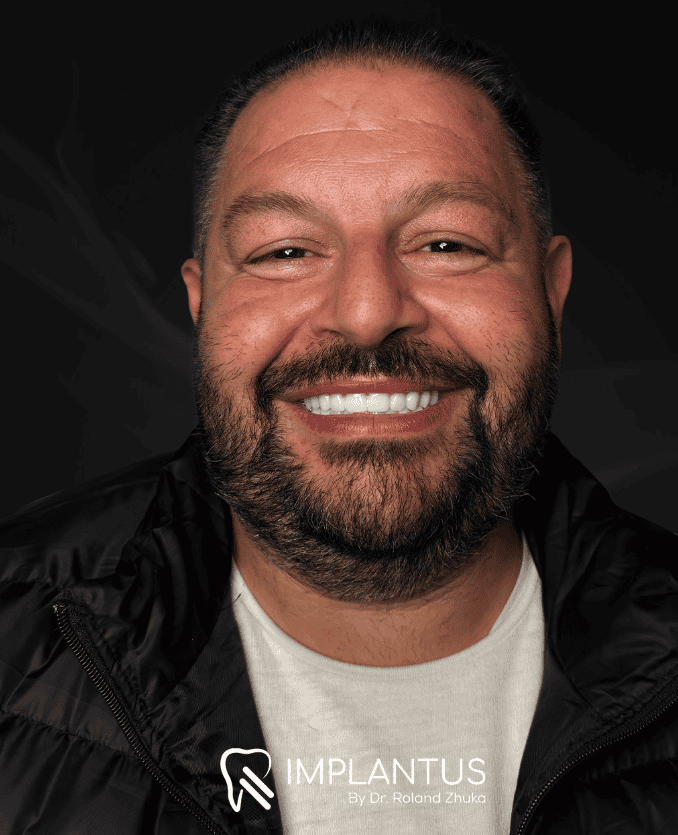
Dr. Zhuka’s commitment to finding solutions for complex cases means that “no” often becomes “yes”—and patients once resigned to dentures find themselves smiling with confidence thanks to permanent implant-supported teeth.


 English
  Italiano
  Shqip
Shqip  Français